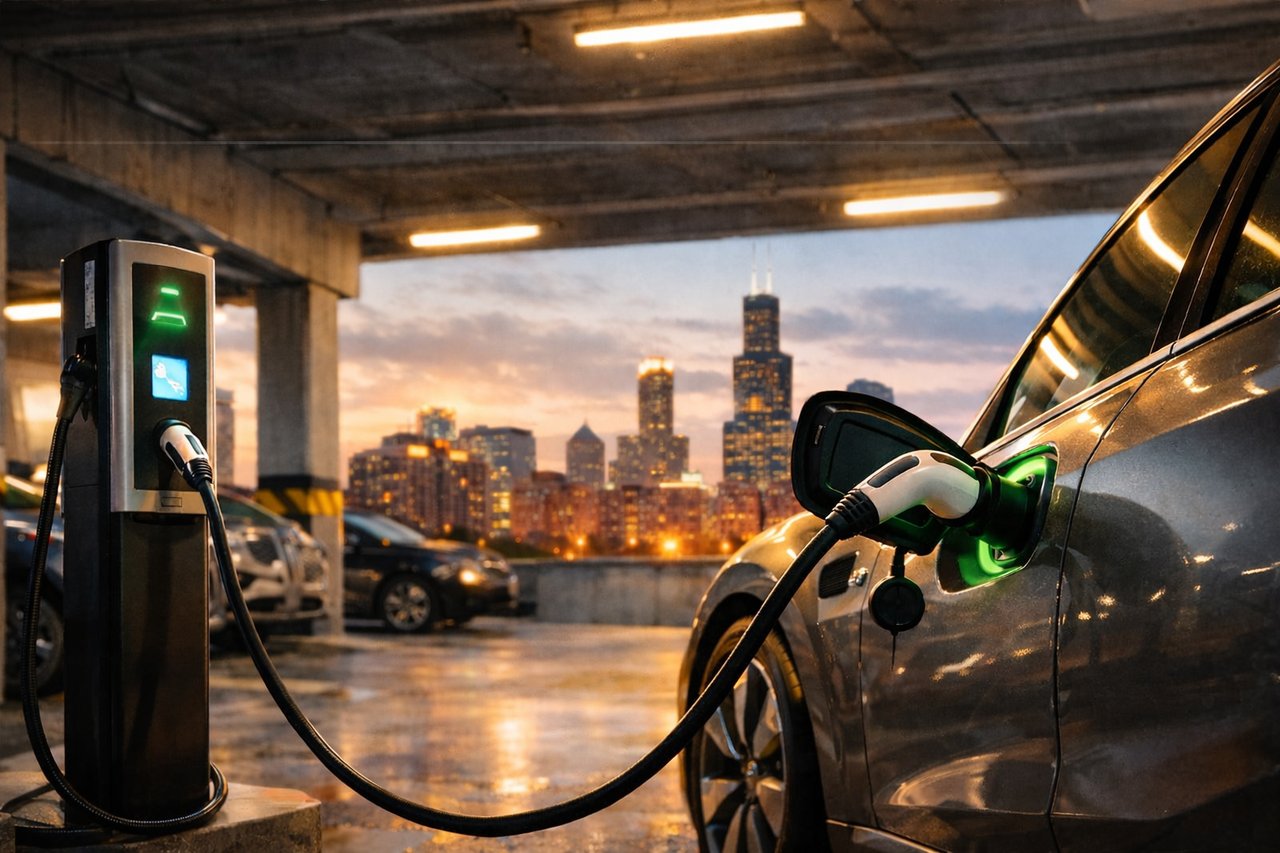
EV Charging in Chicago Condo Buildings: What Sellers and Buyers Need to Know
The EV Charging Gap Is Already Showing Up in Showings
Chicago condo buildings are being pushed to adopt EV charging infrastructure by a combination of Illinois state law, a City of Chicago zoning ordinance, and growing buyer demand, especially in tech-forward neighborhoods like the West Loop and River North. If your building doesn't have it, that gap is already showing up in how buyers evaluate your unit.
Why EV Charging Is Suddenly a Real Estate Conversation
It used to be a niche ask. Now it's coming up on showings.
Buyers in the West Loop, River North, and South Loop drive EVs. Or they plan to. And the first thing many of them want to know when they're evaluating a parking space is: can I charge here?
That's not a lifestyle preference. It's a practical dealbreaker for a growing segment of the market.
Chicago has moved fast on this issue. In 2020, the City Council adopted EV readiness requirements for new multifamily residential buildings with five or more units and parking areas with 30 or more spaces. Then in 2023, the City amended those requirements again. Today, the minimum quantity and configuration of EVSE-ready and EVSE-installed parking spaces is verified as part of the zoning review of a building permit application.
This is real. It's law. And it matters to your resale.
What Chicago's EV Rules Actually Require
Let's break down the two layers of regulation affecting Downtown Chicago condo buildings.
State Law: The Illinois Electric Vehicle Charging Act
The Illinois Electric Vehicle Charging Act took effect in 2024. It supports the growth of electric vehicle infrastructure in residential areas and applies to new residential construction as well as specific rules in common interest communities such as condominiums and HOAs.
The key protection for unit owners: Illinois law now limits how much an HOA can block a resident from installing an EV charger. The Act states that associations cannot outright ban EV chargers on a homeowner's exclusive-use parking spot.
However, there's a critical catch. The Act only grants the right to install EV charging equipment to unit owners of condominium and community associations constructed or established after the date the Act goes into effect (i.e., after January 1, 2024), and thus unit owners in condominium and community associations existing as of January 1, 2024 do not have a right under the Act to install EV charging equipment.
Most downtown Chicago buildings predate 2024. That means owners are not protected by the Act automatically. You still need board approval.
City of Chicago Zoning Ordinance
For new construction and certain renovations, the standards are more specific. 100 percent of off-street parking spaces serving dwelling units intended for household living must be EVSE-ready or EVSE-installed.
For condo conversions specifically: developers renovating buildings with five or more units for the purpose of a condo conversion must ensure that all existing and newly created parking spaces are either "EVSE-Ready" or "EVSE-Installed."
Two terms to know:
EVSE-Ready means the electrical conduit, wiring, and panel capacity are in place to support a future charger. The charger itself isn't installed yet, but the infrastructure is there.
EVSE-Installed means an actual charging unit is mounted and operational within three feet of the parking space.
For sellers in older buildings, the honest answer is: your building is probably neither. And that gap matters.
How Much Does EV Charging Actually Affect Resale Value?
The numbers are starting to catch up with what buyers are already telling us on showings.
Studies suggest condos with EV chargers may see property values rise by 3% to 5%. Having EV infrastructure clearly makes a condo more marketable and appealing.
On the higher end of estimates, depending on the market and property type, adding an EV charger can increase property value by an estimated $10,000 to $15,000.
But in the condo context specifically, the stakes are higher than the dollar range suggests. For condos, EV charging can be a bigger deal because installing charging later can be complicated, involving board approval, electrical capacity, assigned parking, common elements, and more. Buyers know this.
When they see a building with no EV infrastructure, they're not just noting an amenity gap. They're calculating the friction of getting one installed later, a calculation covered well in the complete guide to buying a condo in Chicago.
Research shows properties with EV infrastructure tend to sell faster and at higher prices. Buyers may also perceive chargers as a sign of forward-thinking management, which improves the overall impression of the condo.
That last point is underrated. Forward-thinking management is a real factor in how buyers evaluate downtown Chicago buildings. A building that's already ahead on EV readiness signals something broader about how it's run.
What Downtown Chicago Buyers Are Actually Asking
Here's what I'm hearing on showings, especially in West Loop and River North.
Tech buyers, finance buyers, and younger professionals are increasingly EV owners or actively shopping EVs. They're not asking "does the building have a charger" as a throwaway question. They're filtering by it.
The question they're really asking is: if I buy here, can I charge without a fight?
This is the kind of building-level friction that shows up on our list of red flags buyers watch for in downtown buildings.
Buildings with no EV infrastructure, no policy, and a board that hasn't addressed it push that question into the future. And buyers are calculating the cost and headache of that uncertainty.
The buildings that are getting ahead of this have a real edge.
What Your Building Can Do Now
If your condo association hasn't addressed EV charging yet, here's where to start.
Audit your electrical capacity. Many older downtown buildings have the panel space to support Level 2 charging, but no one has checked. A licensed electrician can assess what's there and what an upgrade would cost.
Adopt an EV charging policy. Even before installing anything, a clear policy protects the building and gives owners a path forward. A good HOA EV charging policy should clearly state that the resident is responsible for covering all installation, maintenance, and utility costs, define where EV chargers can be installed, and outline the process by which residents can apply.
Consider a shared charging program. Some buildings in River North and the West Loop have negotiated deals with charging network operators to install shared Level 2 stations in common garage areas, often with little or no upfront cost to the association.
Look into incentives. Illinois offers up to 50% of your installation cost (to a $3,000 maximum) reimbursed in addition to federal tax credit savings from vehicle purchase. These incentives apply to residents installing their own equipment, and some programs extend to building-wide infrastructure.
The West Loop and River North Situation
These are the two neighborhoods where this conversation is most active right now.
West Loop is home to tech company offices, young professionals, and a buyer pool that skews toward early EV adoption. Buildings like 1000 W. Washington and 900 W. Washington are aging gracefully, but EV infrastructure was never part of their original design. Associations in these buildings are starting to hear from owners.
River North has a similar dynamic. Full-amenity high-rises there compete hard on lifestyle offerings, and EV access is becoming part of that calculus.
Buildings that are proactive on this now will have a meaningful advantage when these buyers come to market, and buildings that wait will find themselves explaining why they're behind. If your association hasn't looked at this yet, the same financial discipline that goes into HOA reserves and long-term planning applies here.
Key Takeaways
- Chicago's EV readiness rules apply to new construction and condo conversions. Most older downtown buildings are not legally required to retrofit, but buyer pressure is real and growing.
- The Illinois Electric Vehicle Charging Act (2024) protects the right to install EV chargers in new buildings, but unit owners in buildings established before January 1, 2024 do not have an automatic right under the Act.
- Condos with EV charging access sell faster and can command a 3% to 5% value premium in competitive markets.
- The complexity of adding EV infrastructure to an established building, including board approval, electrical upgrades, and common element rules, means buyers heavily discount buildings without a clear path forward.
- Associations that adopt an EV policy and audit their electrical capacity now are protecting both owner value and competitive position.
FAQ
Does my downtown Chicago condo building have to install EV charging? Only if it's new construction or a condo conversion that triggered permitting on or after November 1, 2023. Existing buildings are not required to retrofit. But buyer demand is creating real market pressure regardless of legal requirements.
Can my HOA block me from installing an EV charger in my parking space? If your building was established before January 1, 2024, the Illinois Electric Vehicle Charging Act does not give you an automatic right to install one. You need board approval. Many boards are open to it, but the process varies by building.
Does EV charging access affect what my condo is worth? Yes. Research points to a 3% to 5% value premium for condos with EV charging access. More importantly, it affects marketability, meaning how quickly your unit sells and how many buyers seriously consider it.
What's the difference between EVSE-Ready and EVSE-Installed? EVSE-Ready means the electrical infrastructure (conduit, wiring, panel capacity) is in place but no charger is physically installed yet. EVSE-Installed means a working charger is mounted and operational within three feet of the parking space.
Should I mention EV charging when listing my condo? Absolutely. If your building has chargers or EVSE-ready spaces, put it in your marketing. If yours is an assigned space with an installed charger, highlight it prominently. In a buyer pool full of EV drivers, this detail moves people.
Ready to understand how your building's amenities and infrastructure stack up against the competition?
Start with the full guide to selling a condo in Chicago, then call or text Christine Hancock at 312-296-9300 to talk specifics about your unit.
ABOUT THE AUTHOR
Christine Hancock is a Chicago Realtor with @properties Christie's International Real Estate, bringing more than 25 years of experience and over $200 million in closed sales in the downtown condo market. With 96 five-star Zillow reviews, Christine is recognized for her commitment to client satisfaction and market expertise.
She specializes in high-rise and luxury condominium sales in West Loop, South Loop, River North, and Streeterville, helping buyers and sellers navigate complex transactions with data-driven pricing strategies and deep neighborhood insight.
Christine partners with clients to evaluate market trends, position properties competitively, and make confident, informed decisions in Chicago's vibrant downtown housing market.
Call or text 312-296-9300 to discuss current market conditions or your real estate goals.