Buying a Condo in Chicago, The Complete Guide for Downtown Buyers
What Every Chicago Condo Buyer Needs to Know First
Buying a condo in Chicago means more than choosing a unit. You are buying into a building, its financial health, its rules, and its long-term value. The smartest buyers focus on location, building quality, HOA strength, and market timing, especially in neighborhoods like West Loop, River North, South Loop, and Streeterville. Based on current Chicago market data, building quality and HOA financial health often have a greater impact on long-term value than interior finishes alone.
Based on current Chicago market data, downtown condo pricing can vary widely by neighborhood. In February 2026, the median sale price in Downtown Chicago was about $430,000, while Chicago overall was about $390,000. Homes in Downtown Chicago were taking about 91 days to sell on average, which shows why buyers need to compare not just location, but also building quality and pricing strategy.
How to Buy a Condo in Chicago
-
Get pre-approved for a mortgage
-
Choose the right neighborhood and building
-
Evaluate HOA fees and financials
-
Compare buildings, not just units
-
Make a data-driven offer
-
Complete inspections, attorney review, and closing
The Short Answer for Chicago Condo Buyers
Buying a condo in Chicago is about evaluating both the unit and the building behind it. The best outcomes come from understanding HOA financials, neighborhood dynamics, and long-term resale value before making an offer.
What You’re Really Buying When You Purchase a Condo in Chicago
A condo purchase includes your unit plus shared ownership in the building.
Your investment is tied to:
-
HOA financial reserves
-
Monthly assessments
-
Rules and restrictions
-
Future maintenance and special assessments
This is why identical units in different buildings can vary dramatically in price and appreciation potential.
Step by Step Process to Buy a Condo in Chicago
Understand your budget and financing options upfront.
2. Choose Neighborhood and Building Type
Focus on both lifestyle and long-term value.
3. Tour and Compare Buildings
Look beyond finishes. Evaluate multiple buildings before deciding.
4. Make a Competitive Offer
Use local data like days on market and comparable sales.
5. Attorney Review Period
In Chicago, attorneys review contracts and documents before final commitment.
6. Inspection and HOA Document Review
Analyze financials, rules, and building condition.
7. Final Loan Approval and Closing
Most condo purchases close in 30 to 60 days.
When Should You Start House Hunting in Chicago
Start your search after getting pre-approved. This allows you to move quickly in competitive buildings and understand your true budget before touring condos.
How Much Does It Cost to Buy a Condo in Chicago
Understanding the full cost of buying a condo in Chicago is critical. Many buyers focus only on the purchase price, but the true cost includes upfront expenses, ongoing monthly costs, and potential future assessments tied to the building.
Upfront Costs
Most buyers should expect:
-
Down payment
Typically 5 percent to 20 percent depending on loan type -
Closing costs
Usually 2 percent to 5 percent of the purchase price
Includes lender fees, title insurance, attorney fees, and taxes -
Earnest money deposit
Often 1 percent to 3 percent of the purchase price -
Move-in and building fees
Many downtown buildings charge move fees, elevator deposits, or administrative fees
Monthly Costs
Your ongoing ownership costs will include:
-
HOA fees
Covers building maintenance, amenities, and shared expenses -
Property taxes
Varies by neighborhood, unit value, and exemptions -
Homeowners insurance
Typically an HO6 policy for interior coverage
Hidden Costs to Watch
These are the costs many buyers overlook:
-
Special assessments
Additional charges for major repairs or underfunded reserves -
Parking fees
May be separate from the unit and add to monthly expenses -
Amenity surcharges
Some buildings charge extra for fitness centers, storage, or premium services
Key Insight
The true cost of a condo is not just the purchase price. It is the total monthly obligation plus the financial health of the building. Two similar units can have very different long-term costs depending on HOA strength and future capital needs.
Best Neighborhoods to Buy a Condo in Downtown Chicago
In West Loop and River North, similar units can vary by $50,000 to $100,000 based on building quality alone. This is especially true in buildings across West Loop and River North, where buyer demand is high but building performance varies significantly.
Each downtown neighborhood offers a different experience and investment profile.
West Loop Condos
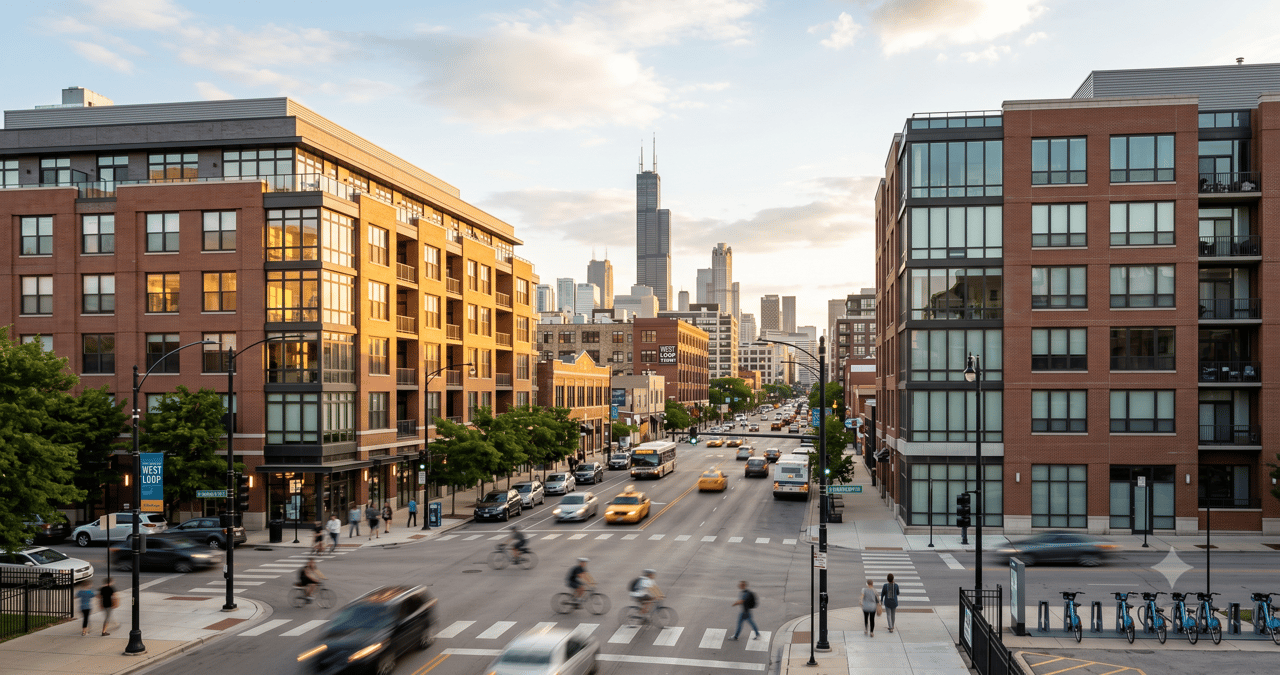
West Loop continues to command a premium. Redfin shows a recent median sale price of about $530,000 and roughly $408 per square foot, which supports its position as one of the strongest downtown neighborhoods for buyers focused on lifestyle, newer construction, and long term demand. redfin
-
Strong appreciation and demand
-
Popular with professionals
-
Newer construction and lifestyle driven
River North Condos
River North remains one of the more active condo markets for buyers who want a central location and strong rental appeal. Recent Redfin data showed a median sale price around $410,000 and about $372 per square foot, which places it below West Loop on a price per square foot basis while still keeping it firmly in the higher demand downtown tier.
-
High density condo market
-
Strong rental demand
-
Ideal for investors and full time residents
South Loop Condos
South Loop often appeals to buyers looking for more space and better relative value. Recent Redfin data showed a median sale price around $380,000 and about $343 per square foot, which helps explain why many first time downtown buyers start their search there. redfin
-
More space for the price
-
Attractive for first time buyers
-
Mix of building types
Streeterville Condos
Streeterville sits at a higher end price point, with recent Redfin data showing a median sale price around $515,000 and about $400 per square foot. Zillow also showed a median days to pending figure of about 68 days in late February 2026, reinforcing that pricing and presentation still matter even in luxury leaning buildings.
-
Luxury high-rise living
-
Lakefront access
-
Higher HOA fees and price points
Chicago Condo Neighborhood Comparison
Recent price per square foot trends help show how different these downtown condo markets really are. West Loop was running at about $408 per square foot, River North at about $372 per square foot, South Loop at about $343 per square foot, and Streeterville at about $400 per square foot. That gap matters because two condos with similar bedroom counts can feel very different in value once you factor in building type, amenities, and HOA structure.
| Neighborhood | Price Level | Buyer Type | Strengths | Tradeoffs |
|---|---|---|---|---|
| West Loop | Higher | Professionals | Growth, restaurants | Competitive pricing |
| River North | Mid to High | Investors | Rental demand | Density |
| South Loop | Moderate | First time buyers | Value, space | Less nightlife |
| Streeterville | Luxury | High end buyers | Location, views | High HOA |
Chicago Condo HOA Fees Explained
HOA fees are one of the most important factors in Chicago condo ownership.
HOA costs can change the math quickly. Typical Chicago condo associations often run around $300 to $400 per month in more standard buildings, but full amenity high rises can climb well beyond that depending on staffing, reserves, utilities, and services included. This is why buyers should compare total monthly cost, not just mortgage payment. christinehancock.com
What HOA Fees Cover
-
Building maintenance
-
Amenities like gyms and door staff
-
Insurance for common areas
-
Utilities such as water and trash
Why HOA Financial Health Matters More Than Monthly Fees
Low HOA fees can signal underfunded reserves. This often leads to special assessments, which can cost thousands.
What Is a Special Assessment
A special assessment is an additional fee charged to owners when a building does not have enough reserves to cover major repairs.
Common causes include:
-
Roof replacement
-
Elevator upgrades
-
Structural repairs
How Condo Financing Works in Chicago
Condo financing is more complex than single family homes.
According to recent downtown condo trends, lenders are placing increased emphasis on HOA reserves, owner occupancy rates, and building stability when approving condo loans.
What Lenders Evaluate
-
Owner occupancy rate
-
HOA financial health
-
Pending litigation
-
Rental percentage
According to the National Association of Realtors, condos often have stricter lending standards due to shared ownership risk.
Do You Have to Sign a Buyer Agreement Before Seeing Condos in Chicago
The Short Answer
You will likely need to sign a buyer agreement before viewing homes with a Realtor. This agreement outlines how your agent represents you and how they are compensated.
Why Buyer Agreements Are Now Required
Recent industry changes have made buyer agreements more common and, in some cases, required before showing properties.
This protects both you and your agent by clearly defining:
-
Who represents you in the transaction
-
How your agent is paid
-
The scope and length of your working relationship
According to the National Association of Realtors, written agreements help ensure transparency and clarity for buyers throughout the process.
What a Buyer Agreement Includes
A buyer agreement is straightforward, but it is important to understand what you are signing.
Key Terms to Review
-
Length of the agreement
This can range from a single day to several months -
Compensation structure
This explains how your agent is paid, whether by the seller, buyer, or a combination -
Exclusivity
Most agreements mean you are working exclusively with that agent -
Cancellation terms
You should always understand how to cancel if needed
Does It Cost You Anything
In many Chicago condo transactions, the seller still offers compensation to the buyer’s agent.
However, this is not guaranteed.
That means:
-
You should clarify compensation before signing
-
You should understand any potential out of pocket obligation
-
You should work with an agent who explains this clearly
Why This Actually Benefits Buyers
A signed agreement is not just paperwork, it sets expectations and improves your experience.
When you work with an experienced agent under a clear agreement, you get:
-
Stronger negotiation strategy
-
Access to off market or pre market opportunities
-
Detailed building level analysis
-
Clear guidance through inspections and HOA review
In competitive downtown markets like West Loop and River North, this level of representation can make a significant difference.
What Buyers Should Do Before Signing
Before you sign any agreement:
-
Ask questions about compensation and flexibility
-
Make sure you are comfortable with the agent’s experience
-
Understand the length and cancellation terms
-
Confirm the agent specializes in Chicago condos
New Construction vs Resale Condos in Chicago
One of the biggest decisions Chicago condo buyers face is whether to buy new construction or a resale unit. Each option has different risks, costs, and long-term value implications.
New Construction Condos in Chicago
New construction is especially common in areas like West Loop.
Advantages
-
Modern layouts and finishes
-
New amenities and building systems
-
Lower maintenance in the early years
-
Strong appeal for future resale
Considerations
-
Higher purchase price
-
Limited negotiation flexibility
-
Property taxes may increase after reassessment
-
Less history on HOA performance
Resale Condos in Chicago
Resale units make up the majority of inventory in River North, South Loop, and Streeterville.
Advantages
-
More pricing flexibility
-
Established HOA budgets and history
-
Ability to evaluate building performance over time
-
Potential to find value opportunities
Considerations
-
Older finishes or layouts
-
Possible upcoming capital improvements
-
Higher risk of special assessments in poorly managed buildings
Which Is Better for Chicago Buyers
The right choice depends on your goals.
If you want predictability and building history, resale condos often provide more transparency
If you want modern features and lifestyle amenities, new construction may be a better fit
In neighborhoods like West Loop, buyers often pay a premium for newer buildings, but building quality and HOA management still matter more than age alone.
Key Insight
A newer building is not always a better investment. A well-managed older building with strong reserves can outperform a newer building with weak financials.
How to Evaluate a Condo Building Before You Buy
A well-managed building protects your investment, while a poorly managed one can reduce value quickly. This pattern is consistent across buildings throughout downtown Chicago.
This step can make or break your investment.
Review Before You Buy
-
HOA financial statements
-
Reserve studies
-
Meeting minutes
-
History of special assessments
-
Planned capital improvements
A well managed building protects your investment. A poorly managed one can reduce value quickly.
Red Flags to Watch for in Chicago Condo Buildings
-
Low reserves
-
Ongoing litigation
-
High investor ownership
-
Frequent special assessments
-
Deferred maintenance
Chicago Condo Market Trends Buyers Should Know
Based on current Chicago market data, condo performance can vary significantly not just by neighborhood, but by individual building quality, amenities, and HOA financial strength.
-
Updated units tend to sell faster
-
Luxury condos often have longer market times
-
Pricing varies significantly by building condition
According to Redfin, market performance can vary even within the same neighborhood.
https://www.redfin.com/city/29470/IL/Chicago/housing-market
Zillow data shows pricing trends are heavily influenced by building quality and location.
https://www.zillow.com/home-values/17426/chicago-il/
Smart Strategy for Buying a Condo in Chicago
-
Get pre-approved early
-
Compare at least 2 to 3 buildings
-
Analyze total monthly cost
-
Watch days on market for leverage
-
Never skip document review
Common Mistakes Condo Buyers Make in Chicago
-
Focusing only on finishes
-
Ignoring building financials
-
Underestimating HOA impact
-
Skipping document review
-
Not comparing multiple buildings
What Most Chicago Condo Buyers Get Wrong
Many buyers focus on finishes first, but market data shows that pricing is often more building specific than buyers expect. West Loop was recently around $408 per square foot while Chicago overall was about $264 per square foot, which shows how much neighborhood and building positioning can affect value before you even get to the kitchen or bathrooms.
Many buyers focus on kitchens and bathrooms.
What actually drives value:
-
Building reserves and management
-
Upcoming capital projects
-
Owner occupancy ratio
In West Loop and River North, similar units can vary by $50,000 to $100,000 based on building quality alone.
Key Takeaways
-
You are buying into a building, not just a unit
-
HOA financial health directly impacts value
-
Neighborhood choice affects lifestyle and appreciation
-
Condo financing requires additional review
-
Building quality often matters more than finishes
Bottom Line
Buying a condo in Chicago is a strategic decision. The right building can protect and grow your investment, while the wrong one can create unexpected costs. The key is balancing location, financial health, and long-term value.
Chicago Condo Buying FAQs
Is buying a condo in Chicago a good investment in 2026?
Yes, especially in high demand downtown neighborhoods. Chicago condos can be a strong investment when you focus on building quality, HOA financial health, and location within high demand areas like West Loop and River North.
What is the average HOA fee for a condo in Chicago downtown buildings?
$200 to $1,500+ depending on amenities. Most standard buildings fall around $300 to $400 per month, while full amenity high rises can exceed $1,000 depending on services, staffing, and reserves.
Are condos harder to finance in Chicago compared to single family homes?
Yes. Lenders evaluate both the buyer and the building, including HOA reserves, owner occupancy, and litigation, which makes condo financing more complex.
Can you rent out a condo in Chicago buildings or are there restrictions?
Depends on building rules. Some buildings allow rentals freely, while others have caps or restrictions, so buyers must review HOA rules before purchasing.
What is considered a healthy HOA reserve for a Chicago condo association?
Well funded reserves cover major repairs. A strong reserve fund reduces the likelihood of special assessments and signals a well managed building.
What is a non warrantable condo in Chicago and why does it matter for buyers?
Does not meet lender guidelines. Non warrantable condos are harder to finance and may require higher down payments or alternative loan options.
How long does it take to buy a condo in Chicago from offer to closing?
30 to 60 days. Most transactions close within this range, depending on financing, attorney review, and HOA document approval.
How much does it cost to buy a condo in Chicago including monthly expenses?
Costs include your purchase price, closing costs, HOA fees, property taxes, and insurance. Buyers should focus on total monthly cost, not just mortgage, because HOA fees and taxes can significantly impact affordability.
Is West Loop a good place to buy a condo in Chicago right now?
West Loop remains one of the strongest downtown condo markets. It typically commands higher price per square foot but offers strong demand, newer buildings, and long term resale appeal.
What should first time condo buyers in Chicago know before purchasing?
First time buyers need to evaluate both the unit and the building. Understanding HOA financials, building rules, and long term costs is just as important as choosing the right layout or finishes.
What is the biggest mistake condo buyers make in Chicago?
Focusing only on the unit. The biggest mistake is ignoring building financial health, which can impact resale value and lead to unexpected costs.
How do you know if a Chicago condo building is a good investment?
Look at financials, reserves, and building history. Well managed buildings with strong reserves, stable ownership, and no major deferred maintenance tend to perform better over time.
Sources
Redfin Chicago Housing Market Data
Zillow Chicago Home Values
National Association of Realtors
ABOUT THE AUTHOR
Christine Hancock is a Chicago Realtor with @properties Christie’s International Real Estate, bringing more than 25 years of experience and over $200 million in closed sales in the downtown condo market. With 96 five-star Zillow reviews, Christine is recognized for her commitment to client satisfaction and market expertise.
She specializes in high-rise and luxury condominium sales in West Loop, South Loop, River North, and Streeterville, helping buyers and sellers navigate complex transactions with data-driven pricing strategies and deep neighborhood insight.
Christine partners with clients to evaluate market trends, position properties competitively, and make confident, informed decisions in Chicago’s vibrant downtown housing market.
Call or text 312-296-9300 to discuss current market conditions or your real estate goals.