One of the most common questions I get from buyers, especially first-time buyers in Chicago, is about property tax credits at closing. The numbers can look confusing on the settlement statement, and if no one explains them clearly, it can feel like you’re paying taxes you don’t owe.
In reality, the tax credit is there to protect you.
Why Buyers Receive a Tax Credit at Closing
In Cook County, property taxes are paid in arrears, meaning homeowners are always paying for a prior period of ownership, not the current one.
So when you buy a home, the seller has lived in the property during a portion of the year for which taxes have not yet been billed or paid. After you close, you will receive the tax bill for that period, even though you didn’t own the home at the time.
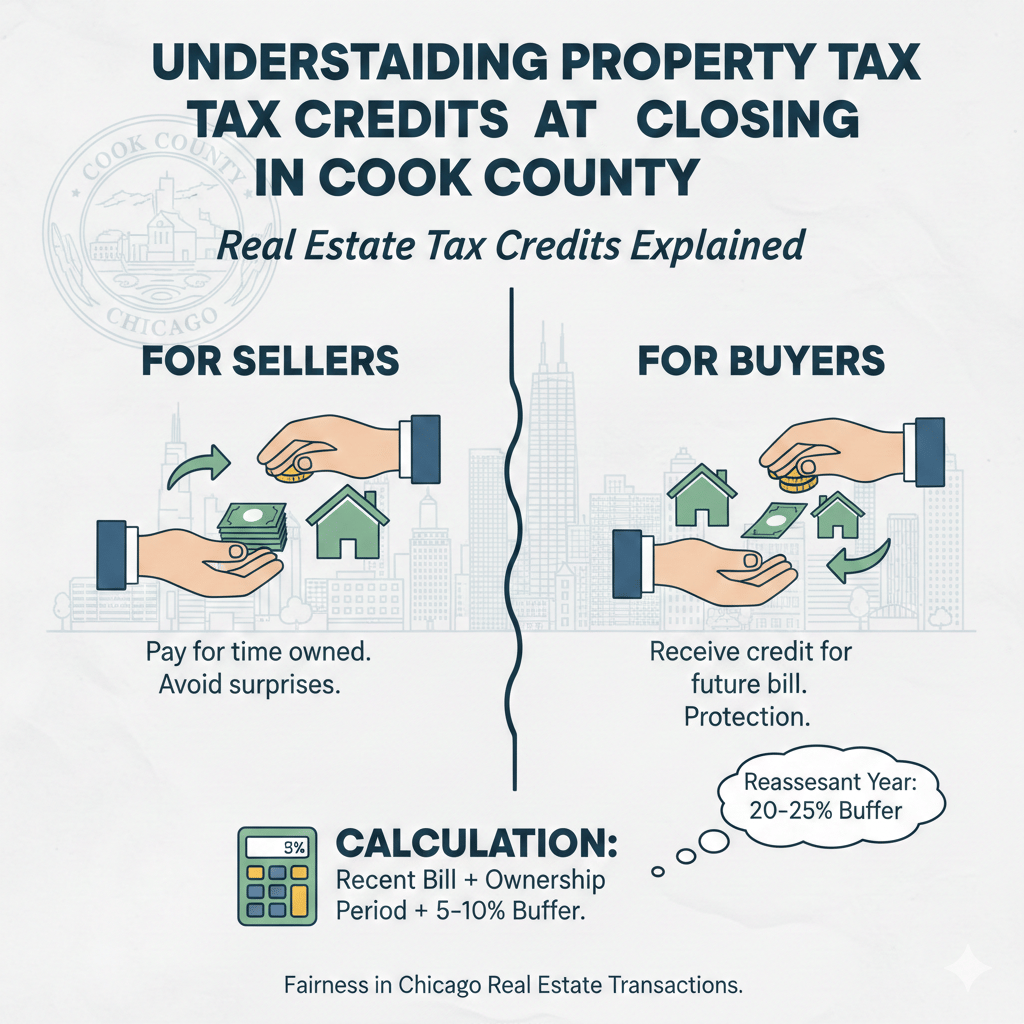
To make this fair, the seller provides the buyer with a property tax credit at closing. That credit is intended to cover the seller’s share of the upcoming tax bill.
How the Tax Credit Is Calculated
The attorneys for both sides calculate the tax credit based on:
- The most recent tax bill available
- The number of months (or days) the seller owned the property since that bill was paid
Because Cook County tax bills are often delayed and estimates are used, it’s common, and expected, for both parties to pad the tax credit by 5–10%. This cushion helps protect the buyer in case the final tax bill comes in higher than anticipated.
This padding isn’t a negotiation tactic, it’s a practical safeguard in a county where taxes frequently change.
What Happens in a Reassessment Year
In a reassessment year, the padding can be significantly higher, sometimes 20–25%.
Why?
Because reassessments often lead to substantial increases in property taxes, especially in popular neighborhoods or buildings where values have risen sharply. Since the new tax amount isn’t known at the time of closing, attorneys increase the credit to reduce the risk that the buyer will be left paying more than their fair share.
This is particularly important for:
- Condo buyers in buildings with recent sales activity
- Buyers in rapidly appreciating neighborhoods
- Properties that were under-assessed in prior years
Why This Matters for Buyers and Sellers
For buyers, the tax credit ensures you are not paying taxes for time you didn’t own the home. While it increases the amount the seller pays at closing, it prevents a much bigger surprise later when the tax bill arrives.
For sellers, understanding this credit upfront helps avoid sticker shock at closing. The credit is not an extra fee, it’s simply settling up what you already owe for the time you lived in the home.
Final Thoughts
Property tax credits are a normal, and a necessary part of buying and selling real estate in Cook County. While the math can feel complex, the goal is simple: fairness.
Your attorney and your real estate agent should walk you through the numbers so you understand exactly how the credit was calculated and why it’s there. When handled properly, it ensures a clean handoff between seller and buyer, with no surprises after closing.
If you’re buying or selling in Chicago and want help understanding how property taxes, credits, and reassessments could affect your transaction, I’m always happy to walk through it with you.