The Condo Inspection Negotiation: Repairs, Credits, and What Actually Gets Done
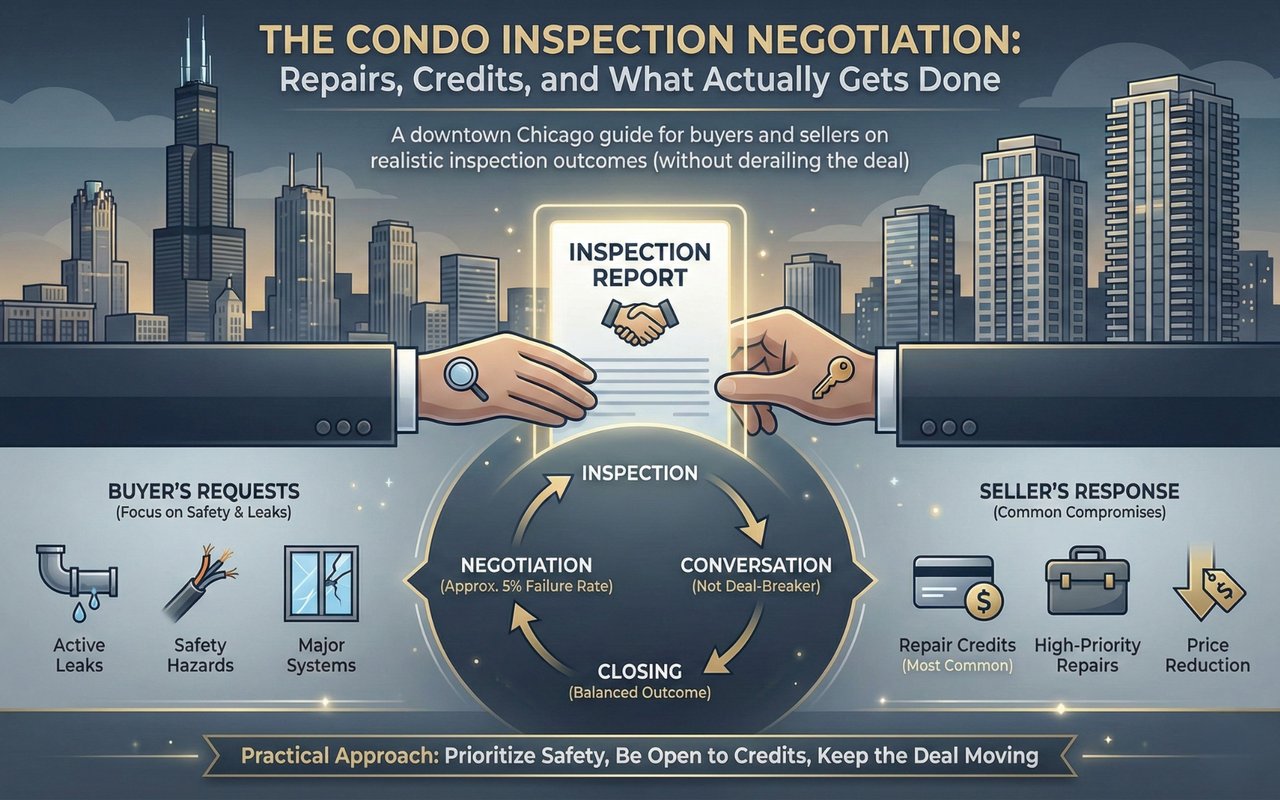
In most downtown Chicago condo transactions, the inspection doesn’t end the process—it starts a conversation. After the report comes in, buyers often request repairs, credits, or a price reduction, and sellers typically respond with a counter that keeps the deal moving while limiting disruption before closing.
Why “credits” are so common in condos
In condo deals, a repair credit or price reduction is often more practical than trying to fix every line item. Scheduling vendors in high-rises can take time (building rules, COI requirements, move/elevator reservations), and some issues involve shared building components the seller can’t simply “repair” on demand. As a result, many buyers accept a credit at closing so they can choose contractors, timing, and scope after they own the unit.
How often inspection negotiations happen (and how often they kill deals)
In typical resale transactions (condos included), it’s normal to have a second round of negotiation after inspection—repairs, credits, or a price adjustment. Even when the inspection list looks long, most deals don’t fall apart purely over repair disagreements; industry professionals commonly cite a small failure rate (around 5%5\%5%) specifically tied to buyers and sellers being unable to agree post-inspection. The takeaway is that compromise is the norm, not the exception.
What sellers are most likely to say “yes” to
Sellers are most likely to address issues that affect safety, water intrusion, major systems, or lender/insurance requirements—especially items that could jeopardize financing. In downtown condos, that often means:
-
Active leaks or evidence of ongoing moisture problems (windows, exterior wall seepage, plumbing leaks, HVAC condensate issues)
-
Significant electrical hazards (improper wiring, unsafe panels, overheating concerns)
-
Non-functioning major unit systems (HVAC not operating, significant plumbing defects)
-
Items required by the buyer’s financing or the building’s rules for transfer
Sellers also tend to cooperate when the issue is clear, documentable, and materially affects livability.
What sellers can’t (or won’t) fix—especially in high-rises
A big condo-specific reality: many “issues” are tied to common elements or building maintenance (facade, roof, risers, shared plumbing stacks, hallways, structural components). Those are typically the association’s responsibility, not something an individual seller can repair before closing. Refusals (or smaller credits) are also more common when the buyer requests a long list of cosmetic or minor items—think loose fixtures, small drywall blemishes, or “upgrade” requests rather than true defects—particularly in stronger seller markets or “as-is” contracts.
Common compromises that keep condo deals on track
Most successful condo inspection negotiations land in one of these outcomes:
-
A short list of high-priority repairs completed by licensed contractors (when feasible within building rules)
-
A repair credit at closing (common when access/scheduling is complex)
-
A purchase price reduction reflecting the needed work (often simpler than coordinating multiple vendors)
Example: If the inspector notes an aging fan coil that still works but shows wear, the parties may negotiate a modest closing credit rather than requiring replacement before closing, especially if the building has vendor requirements and lead times. That approach reduces pre-closing friction while still acknowledging cost.
A practical approach for both sides
For buyers: prioritize safety, active leaks, and big-ticket functional issues, and be open to credits when logistics or common-element limits make repairs unrealistic.
For sellers: expect a reasonable ask after inspection, focus on items that could impact financing or create real risk, and use credits strategically to keep the transaction moving without managing a dozen pre-closing projects.
Buying or selling a condo in one of the Downtown Chicago neighborhoods?
Pro Tips:
Do you need to sign a Buyers Agreement before looking at homes?