Is square footage important when buying a condo in Chicago?
Short answer: yes… but not in the way most buyers think.
Square footage gives you a rough idea of size, but it does not tell you how a home actually lives.
In Chicago condos, especially in neighborhoods like the West Loop and River North, layout, ceiling height, and natural light often matter more than the number on paper.
A well designed 1,800 square foot condo can feel significantly larger than a poorly laid out 2,400 square foot unit.
If you rely only on square footage, you can easily overpay or overlook better opportunities.
What Does Square Footage Actually Mean?
Square footage refers to the total interior living space of a property, measured in square feet.
However, there is no universal standard for how it is calculated.
Depending on the source, square footage may or may not include:
- Interior walls
- Closets and storage areas
- Mechanical spaces
- Balconies or terraces (in some cases)
In Chicago condo buildings, square footage is often based on developer plans, past listings, or estimates, which means the number can vary.
Here's What Actually Matters
Square footage is a reference point, not a verdict. A well-designed 1,800-square-foot condo in the West Loop can feel more spacious and functional than a poorly laid out 2,400-square-foot unit across town. Buyers who focus on livability over raw size consistently make smarter decisions.
Why Price Per Square Foot Can Be Misleading in Chicago
Price per square foot is often used to compare condos.
But in Chicago, it can be very misleading.
Two units in the same building can have drastically different values even if the square footage is identical.
Why?
- Floor height and views
- Renovation level
- Layout efficiency
- Natural light
- Ceiling height
A higher price per square foot does not always mean better value.
And a lower one does not always mean a deal.
Why Square Footage Gets So Much Attention
It's easy to understand why buyers lead with it.
Square footage feels measurable. Objective. Comparable. You can filter by it, sort by it, and use it to eliminate listings before you ever step inside.
But here's the problem. Square footage is one of the least standardized metrics in real estate.
There is no single nationally recognized method for measuring a home's square footage. Developers, appraisers, assessors, and previous agents can all arrive at different numbers for the exact same unit. In Downtown Chicago condo buildings, this inconsistency is especially common. Older buildings converted from industrial or commercial use, like lofts in the West Loop or Fulton Market, may have irregular footprints that are genuinely difficult to measure consistently.
According to the National Association of Realtors, square footage disputes are one of the leading sources of post-closing complaints between buyers and sellers. That's one reason some listing agents and sellers choose not to publish a specific number at all.
Why Some Listings Leave Square Footage Out
This surprises buyers. But there's a practical reason behind it.
When a number is listed and later disputed, it opens the door to legal exposure. Differences of even 50 to 100 square feet can alter a buyer's perception of value, especially in markets where price per square foot is used as a benchmark.
Rather than publish a figure that might be challenged, some sellers prefer to let the home show its size through photos, floor plans, and in-person tours.
The Chicago Association of Realtors notes that disclosures and measurements must meet specific standards, but those standards still leave room for variation in how measurements are taken, what counts as finished space, and whether below-grade or common areas are included.
If you're evaluating a Downtown Chicago condo and there's no square footage listed, that's not necessarily a red flag. Ask your agent to request a floor plan or prior appraisal.
What Square Footage Actually Tells You (and What It Doesn't)
Square footage tells you total area. That's it.
It doesn't tell you:
- How the rooms connect
- Whether the layout makes sense for how you live
- If the light is good in the spaces you'll actually use
- How much of the square footage is wasted on hallways, oversized foyers, or awkward cutouts
- Whether the ceiling height makes the space feel open or compressed
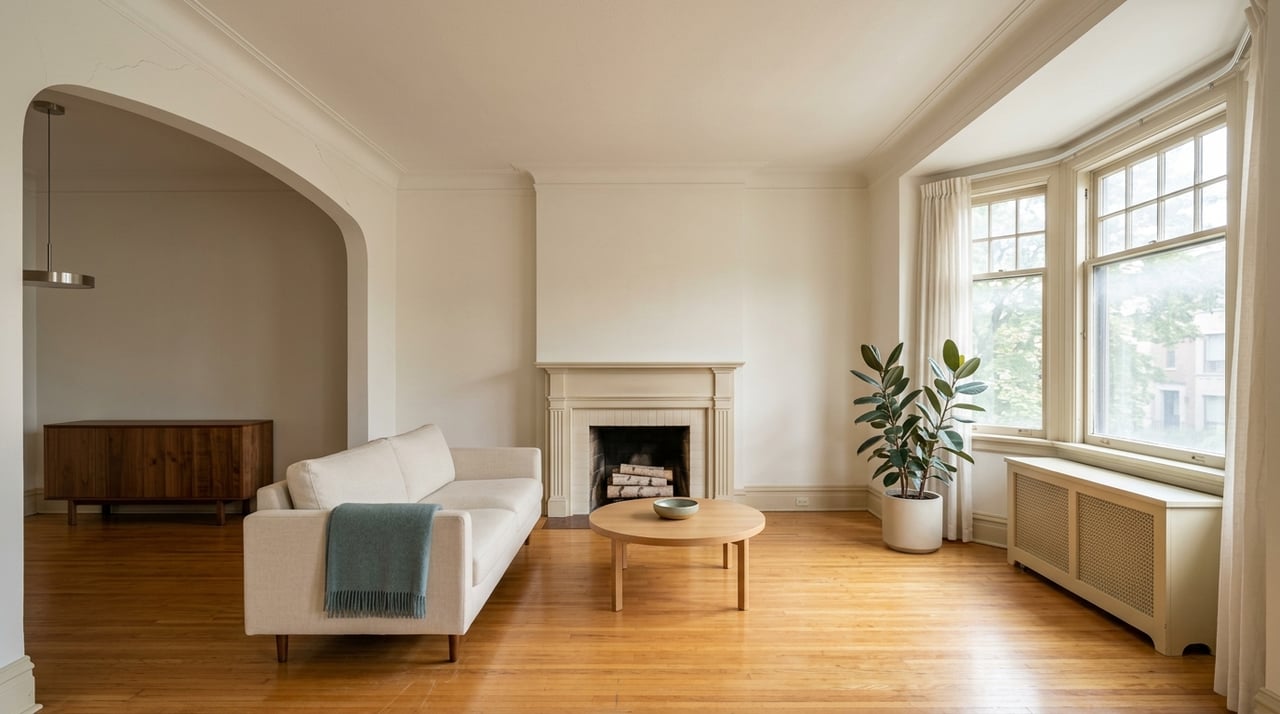
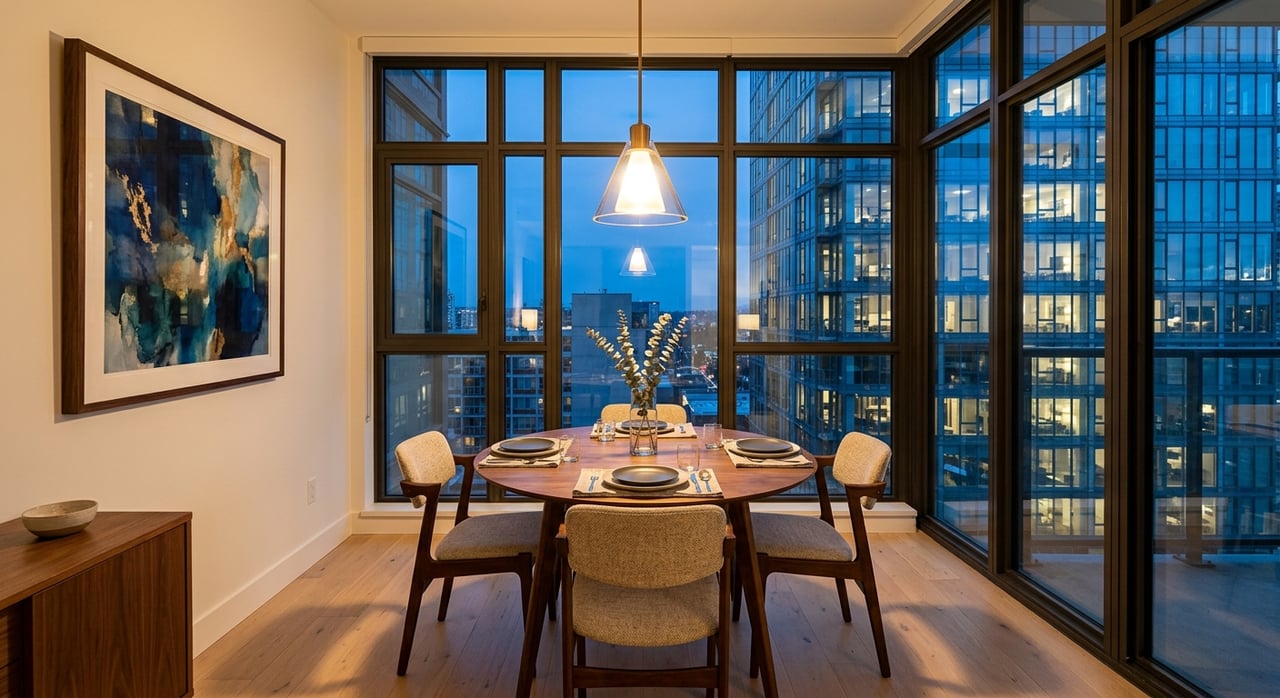
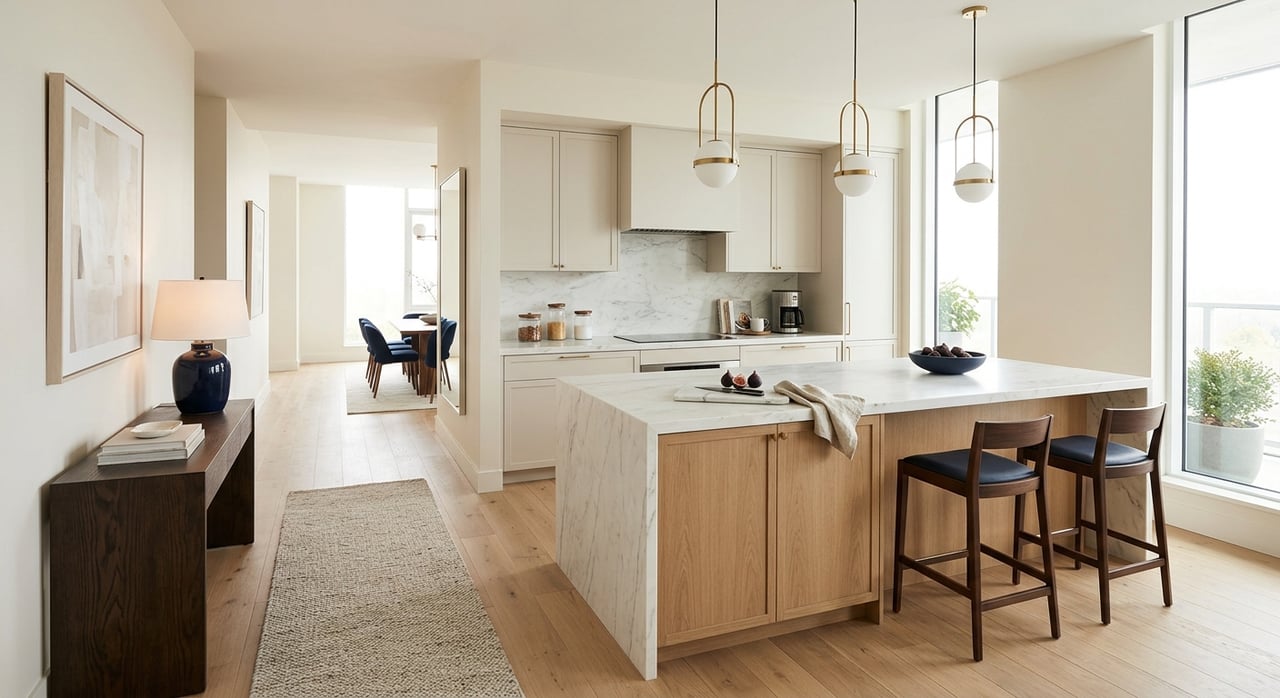
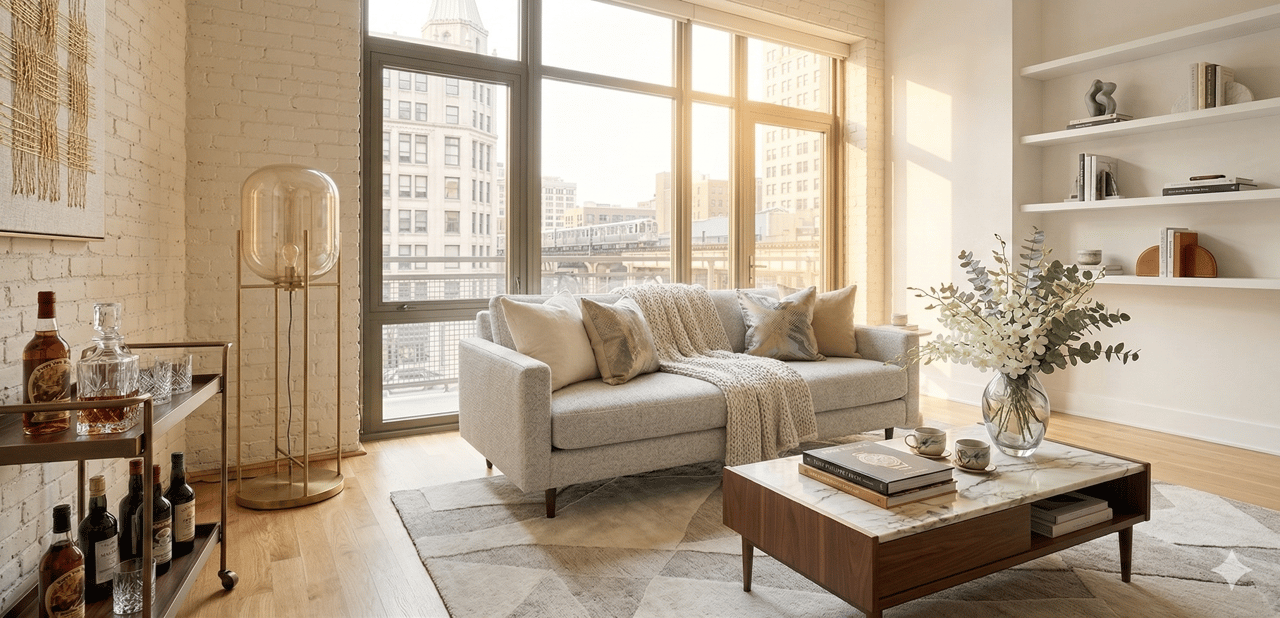
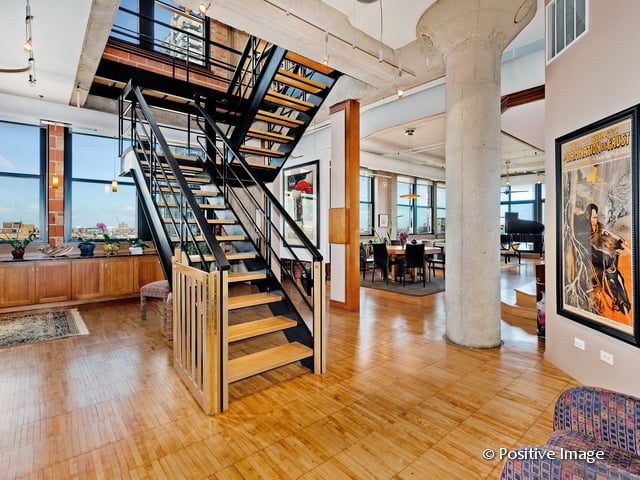
Two condos in River North can share the same square footage and feel completely different. One has 9-foot ceilings, floor-to-ceiling windows, and an open kitchen that flows into the living room. The other has a choppy layout, lower ceilings, and a bedroom that faces a brick wall.
Which one would you rather live in?
The Real Metric: How a Home Lives
Experienced buyers shift their focus after a few tours. They stop leading with square footage and start asking better questions.
Room dimensions. Does your furniture actually fit? Can you seat eight at a dinner table? Is there space for a home office that doesn't double as a closet?
Flow between spaces. Does the layout make sense for how you move through a home? Is the kitchen connected to the living area in a way that works for entertaining?
Ceiling height. In Chicago high-rises, this varies dramatically. A unit with 10-foot ceilings in the South Loop can feel significantly more expansive than one with 8-foot ceilings in the same building, even at identical square footage.
Natural light. North-facing units, interior-facing units, or units blocked by adjacent buildings lose livability regardless of their size on paper.
Storage. Real storage. Not just a coat closet and a hall linen shelf. Does the unit have in-unit laundry, a proper pantry, bedroom closets that hold a full wardrobe?
According to Redfin's buyer behavior research, buyers who prioritize layout and light over raw square footage report higher satisfaction with their purchase at the one-year mark.
A Practical Framework for Evaluating Space
Before your next showing, run this quick check:
- Request a floor plan. Most newer Downtown Chicago buildings have them. If the listing doesn't include one, your agent can request it.
- Measure your furniture. Know the dimensions of your couch, dining table, and bed before you walk in.
- Look up, not just around. Ceiling height changes the feel of a room more than an extra 100 square feet on the floor.
- Check light by time of day. Where does the sun hit? At what time? Units that face west get beautiful afternoon light and brutal summer heat. Units that face east get morning sun and tend to be cooler.
- Count real storage. Open every closet. Check for a storage unit in the building. Ask about bike storage and temperature-controlled options.
- Walk the layout slowly. Start at the front door and move through the home the way you'd actually use it. Does it feel natural?
This process gives you a far more accurate sense of value than any number on a listing sheet.
What This Means in the Downtown Chicago Condo Market
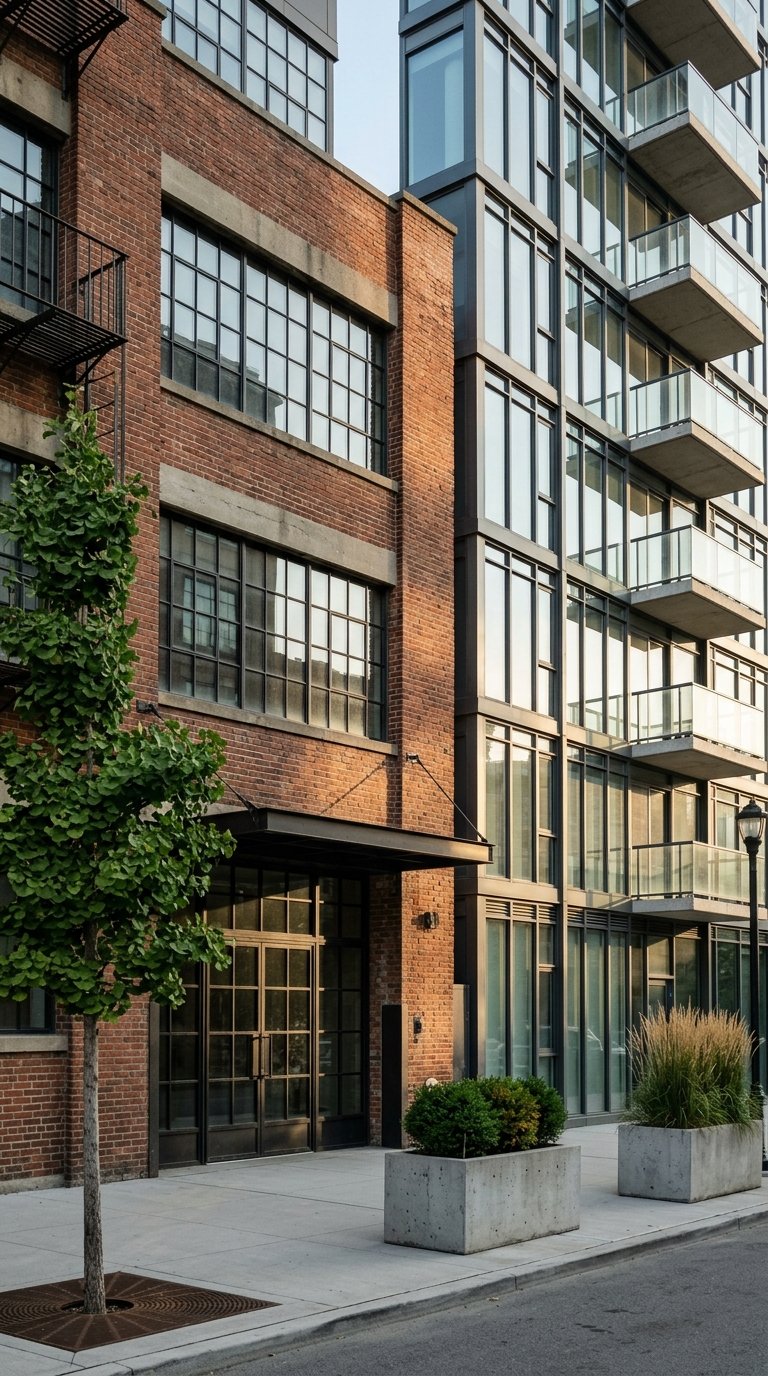
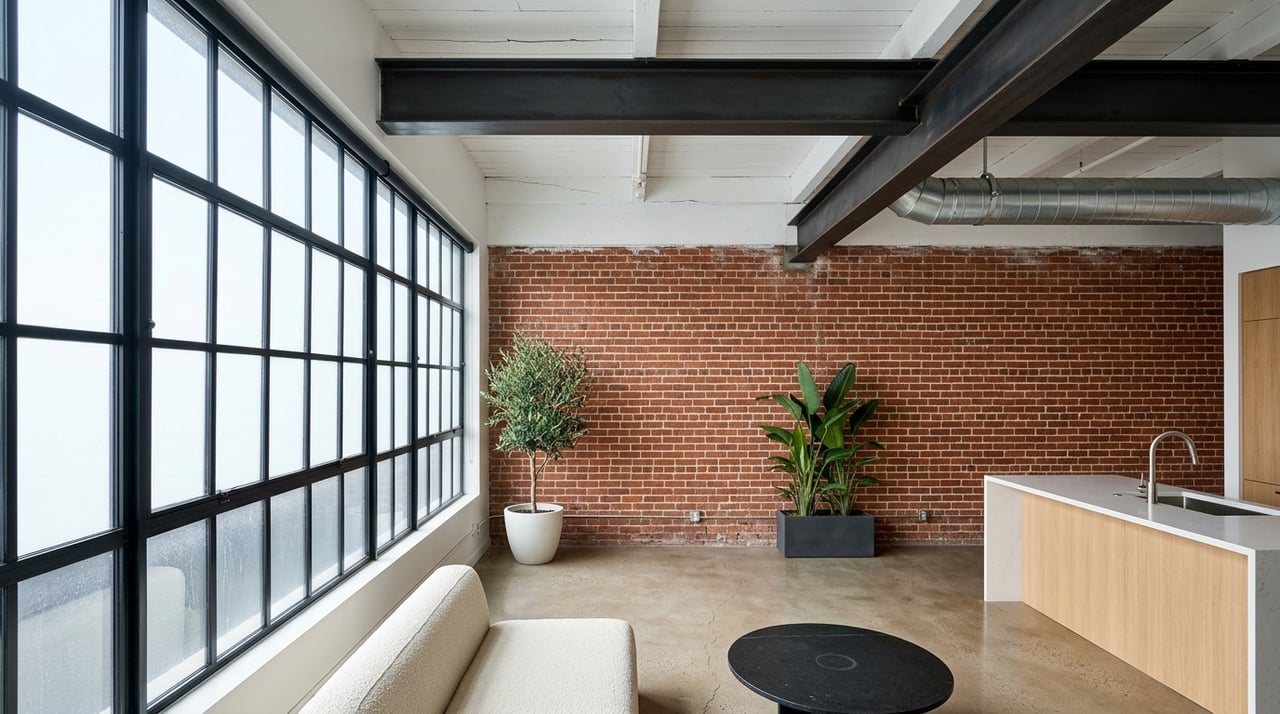
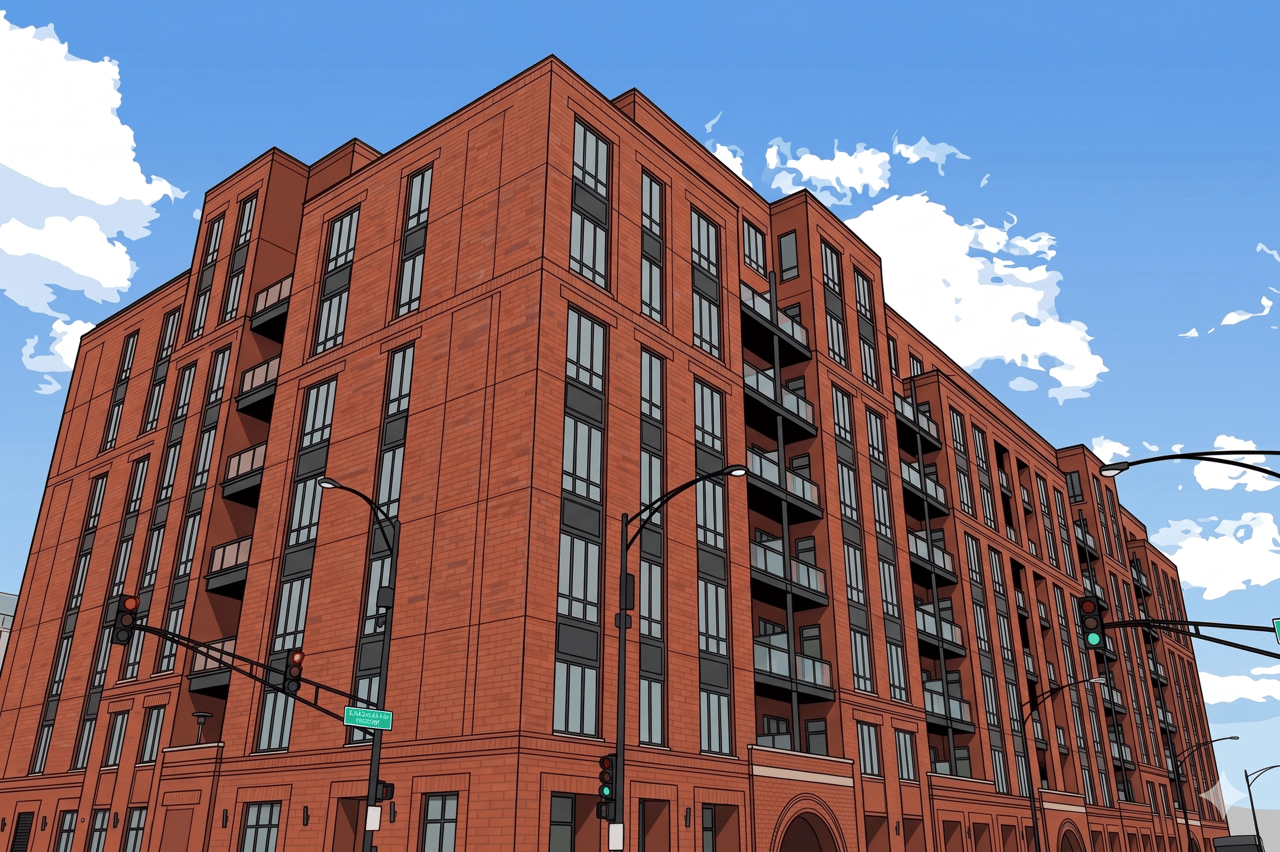
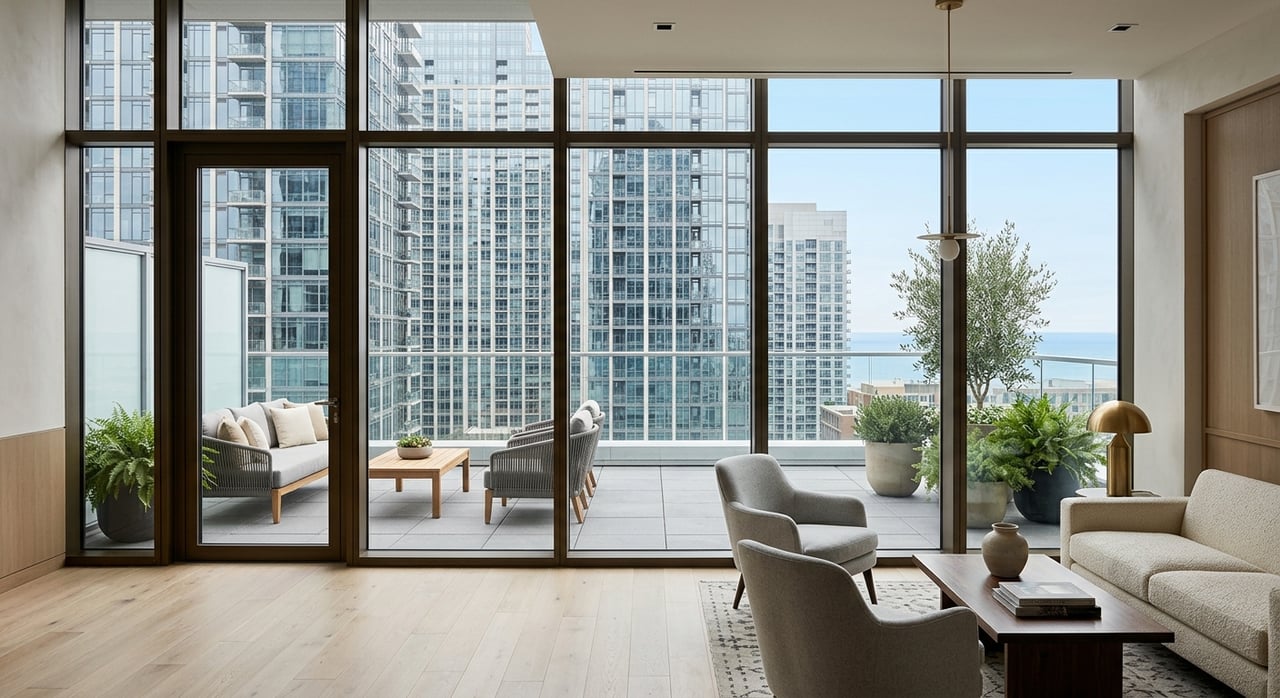
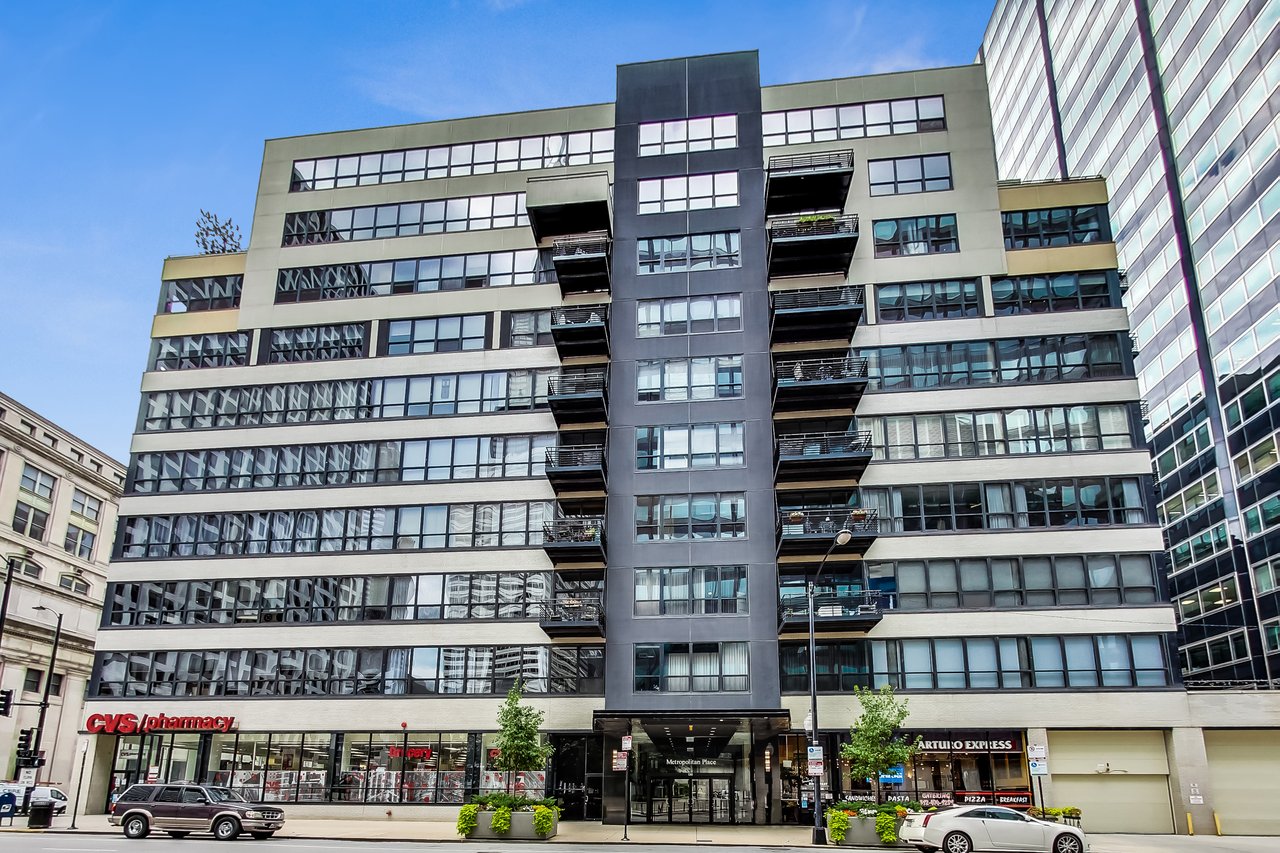
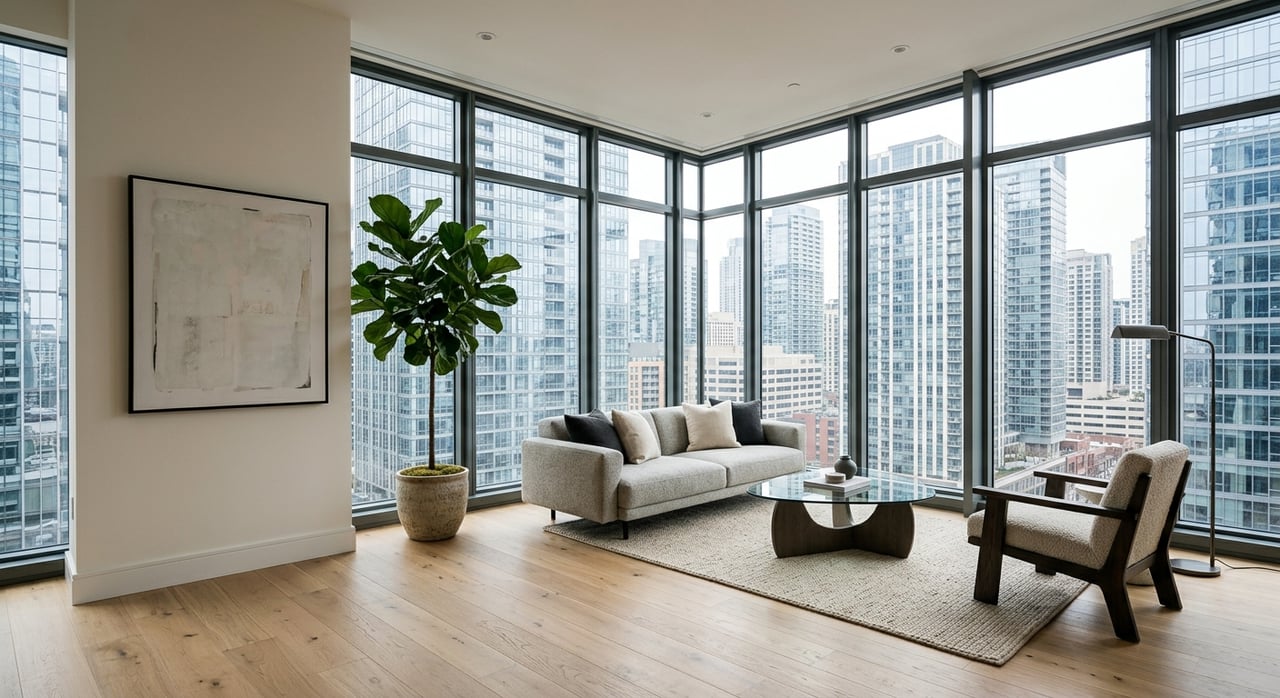
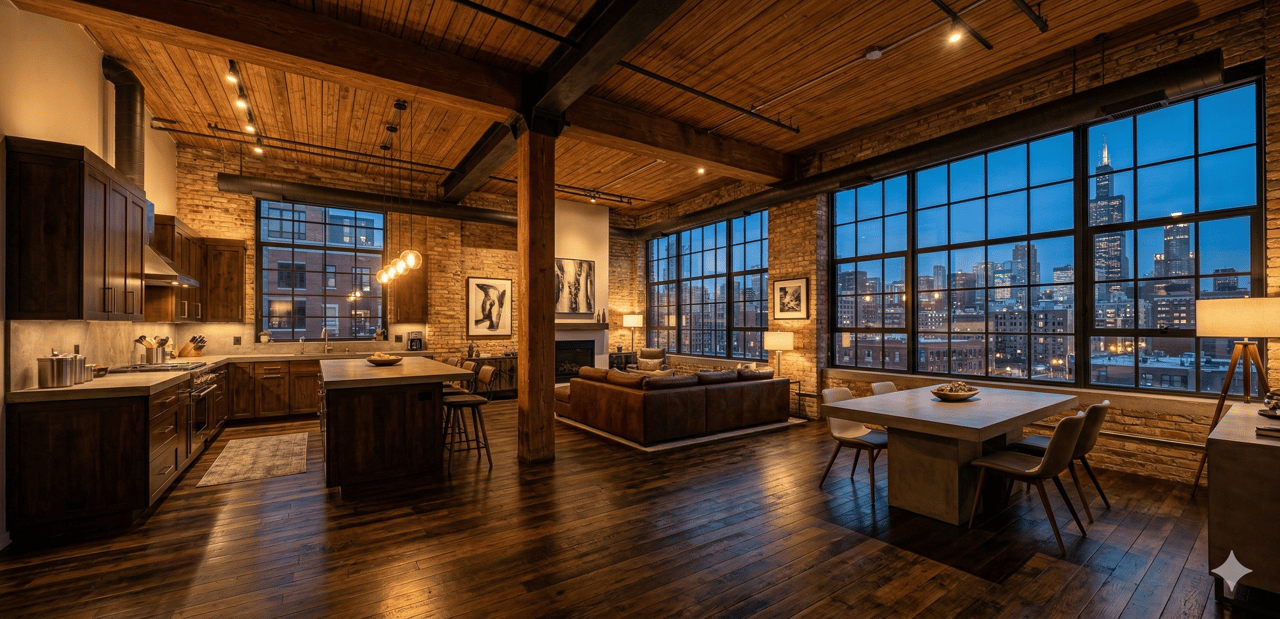
Chicago's downtown condo market spans a wide range of building types, from converted lofts in the West Loop with exposed brick and timber ceilings to glass tower high-rises in Streeterville with panoramic views. Square footage benchmarks vary significantly across these building types.
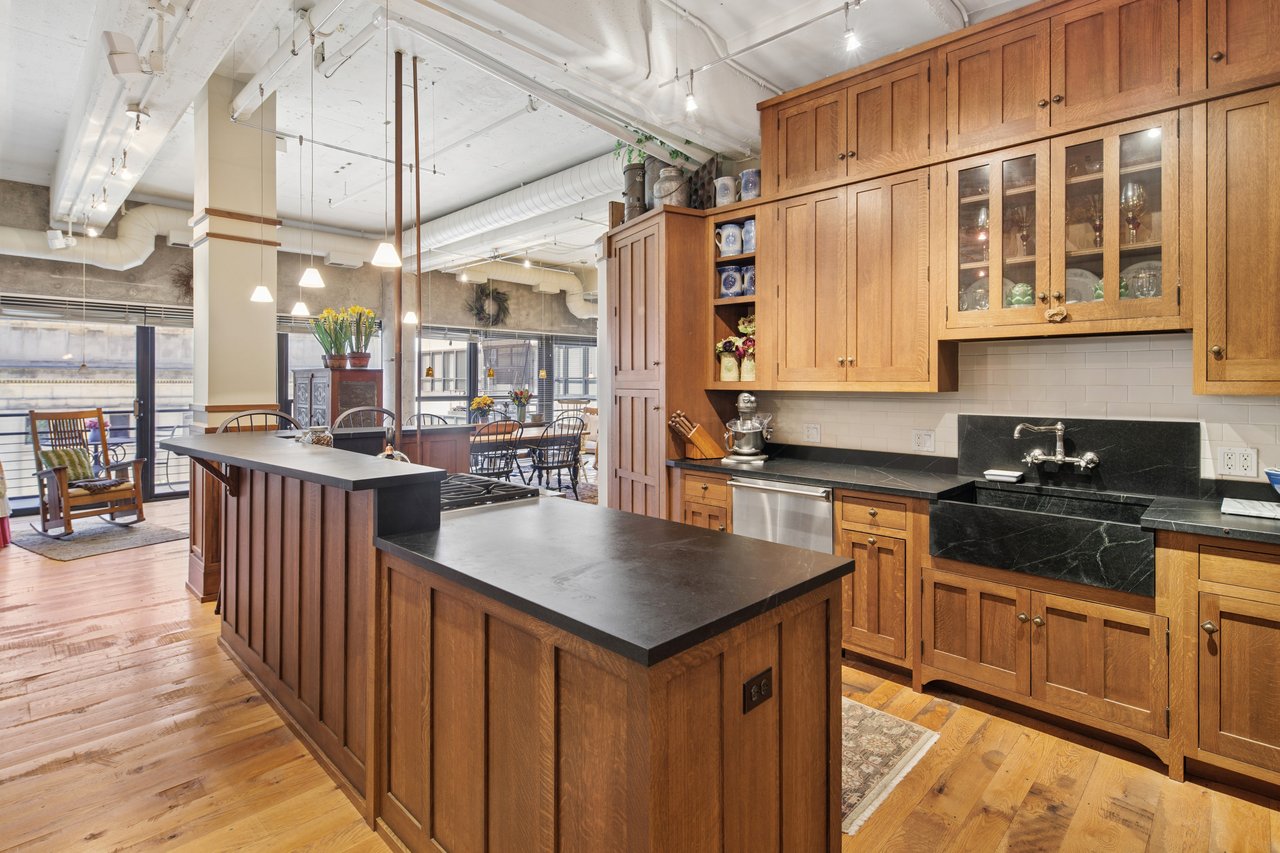
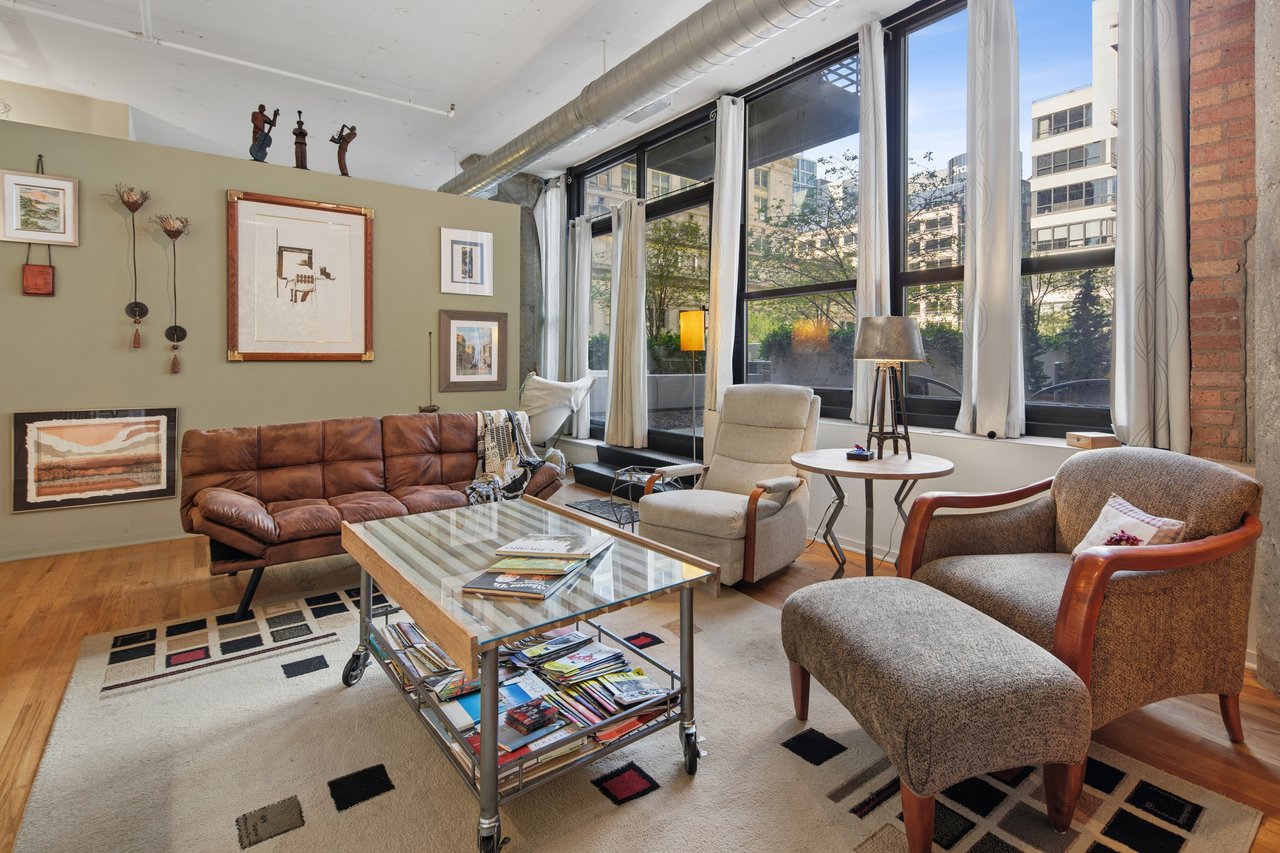
A 1,400-square-foot timber loft at a building like 210 S. Des Plaines in the West Loop lives very differently than a 1,400-square-foot unit in a traditional high-rise. The loft may have 14-foot ceilings, open spans, and an industrial aesthetic that makes the space feel twice its size. The high-rise unit may have a more efficient layout with better storage but a more contained feel.
Neither is better. They're just different. And neither can be fully understood through square footage alone.
As someone who has sold more than 300 homes in the West Loop and over 86 units at 125 S. Jefferson St. alone, I've walked through thousands of units across Downtown Chicago. I've seen buyers fall in love with "small" apartments that live brilliantly, and pass on larger units that felt cramped and awkward. The number matters less than you think.
Key Takeaways
- Square footage is inconsistently measured across buildings, developers, and listing platforms, making it an unreliable comparison tool.
- Layout, ceiling height, natural light, and storage are stronger indicators of how a home actually lives.
- Some listings deliberately omit square footage to avoid disputes, not to hide something negative.
- Buyers who shift their evaluation criteria from size to livability report higher satisfaction after purchase.
- In Downtown Chicago, building type matters as much as square footage when assessing space.
Bottom Line
Square footage will always be part of how buyers shop. That's not going away. But the best buyers know how to look past the number and assess a home on what actually affects their daily life.
When you walk into a space and it feels right, when the kitchen works, the light is good, and your furniture fits, the number on the sheet becomes irrelevant. That's the unit you should be making an offer on.
Don't let a missing or low square footage figure disqualify a home before you've stood in it. And don't let a high number lure you into a space that doesn't actually work for how you live.
FAQ
Why don't some listings include square footage? There's no single universal standard for measuring square footage, and discrepancies between methods can lead to disputes. Some sellers and agents choose to omit it rather than publish a number that could be challenged after closing.
Is it a red flag when a listing doesn't have square footage? Not necessarily. It's more common than buyers realize, especially in older buildings and converted lofts in Downtown Chicago. Ask your agent to request a floor plan, a prior appraisal, or the assessor's records.
How do I compare two condos if one lists square footage and the other doesn't? Focus on room dimensions, ceiling height, layout flow, storage, and light. Request floor plans for both. Tour them at the same time of day if you can. Your gut reaction after walking both is often more accurate than a spreadsheet comparison.
Does price per square foot matter in Downtown Chicago? It's a useful benchmark for comparing similar units in the same building or building type. But it loses accuracy when you compare across building types, neighborhoods, or floor heights. Use it as one data point, not the deciding factor.
What should I ask at a showing if square footage isn't listed? Ask for the floor plan, the assessor's square footage on record, and the original developer's measurement if the building is newer. Then walk the unit with your own tape measure for key rooms like bedrooms and living areas
ABOUT THE AUTHOR
Christine Hancock is a Chicago Realtor with @properties Christie's International Real Estate, bringing more than 25 years of experience and over $200 million in closed sales in the downtown condo market. With 96 five-star Zillow reviews, Christine is recognized for her commitment to client satisfaction and market expertise.
She specializes in high-rise and luxury condominium sales in West Loop, South Loop, River North, and Streeterville, helping buyers and sellers navigate complex transactions with data-driven pricing strategies and deep neighborhood insight.
Christine partners with clients to evaluate market trends, position properties competitively, and make confident, informed decisions in Chicago's vibrant downtown housing market.
Call or text 312-296-9300 to discuss current market conditions or your real estate goals.