Chicago Loft Living: Timber vs Concrete Lofts Chicago
What Is the Difference Between Timber and Concrete Lofts in Chicago?
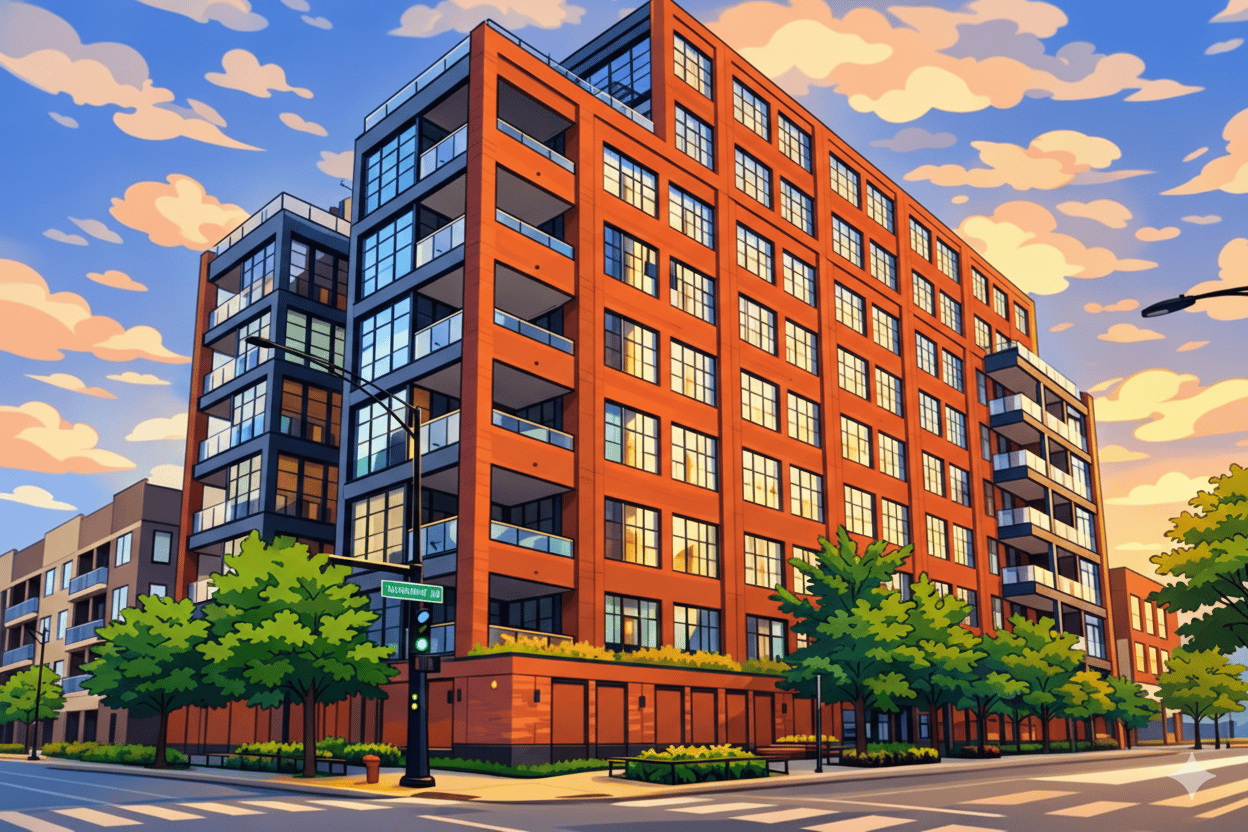
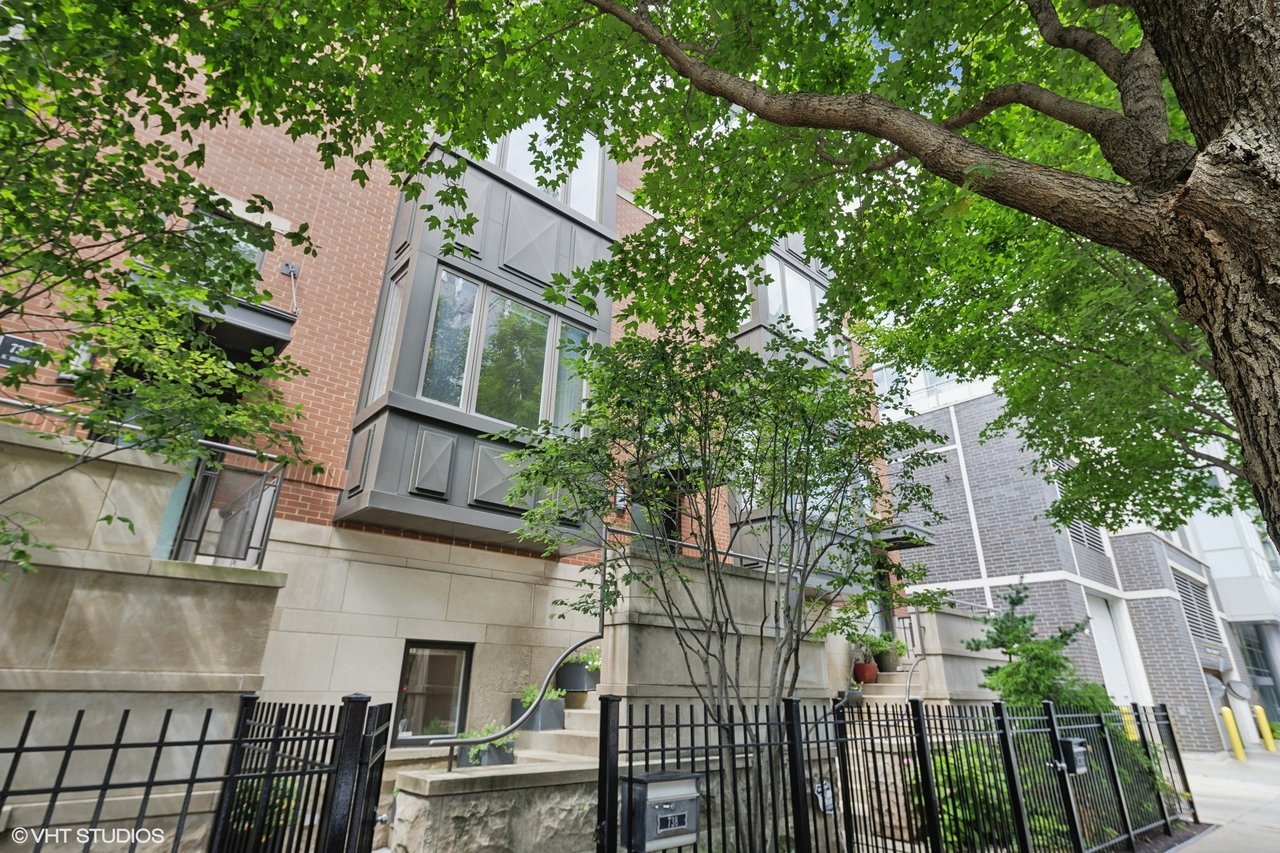
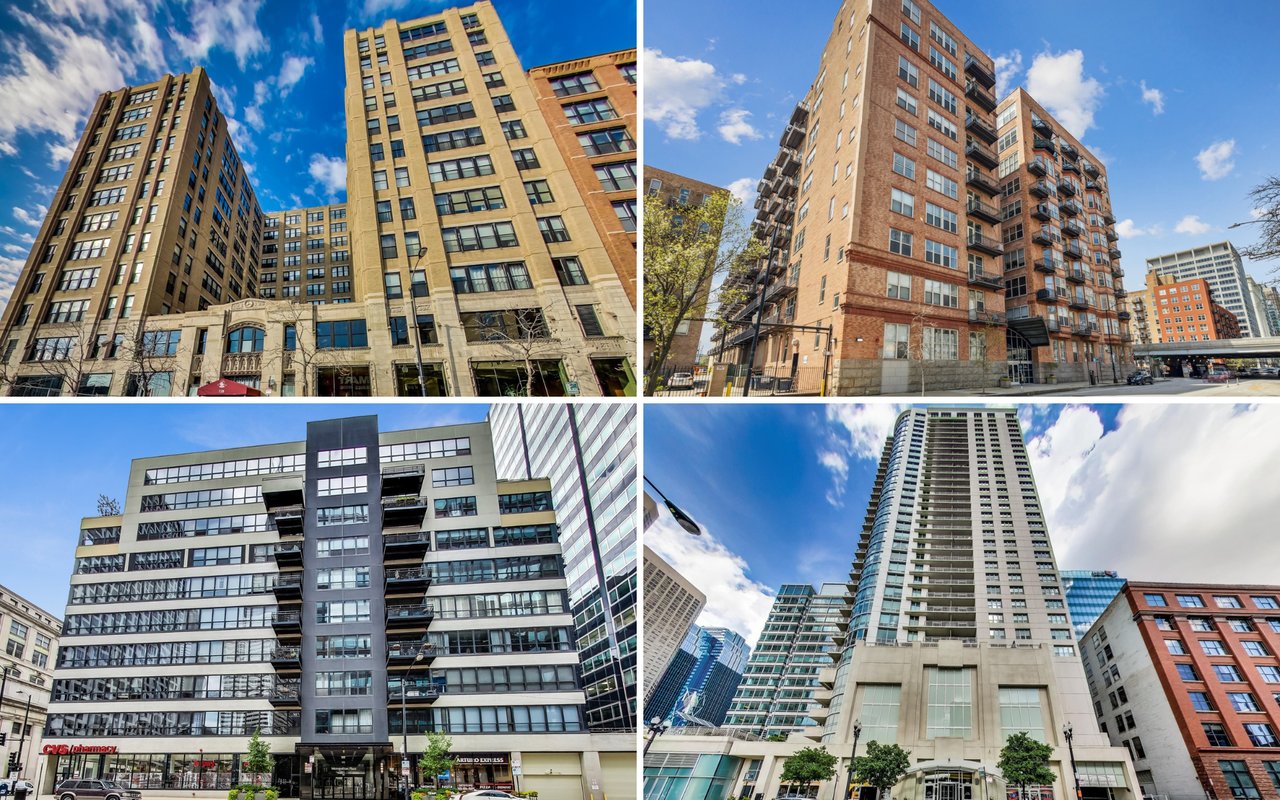
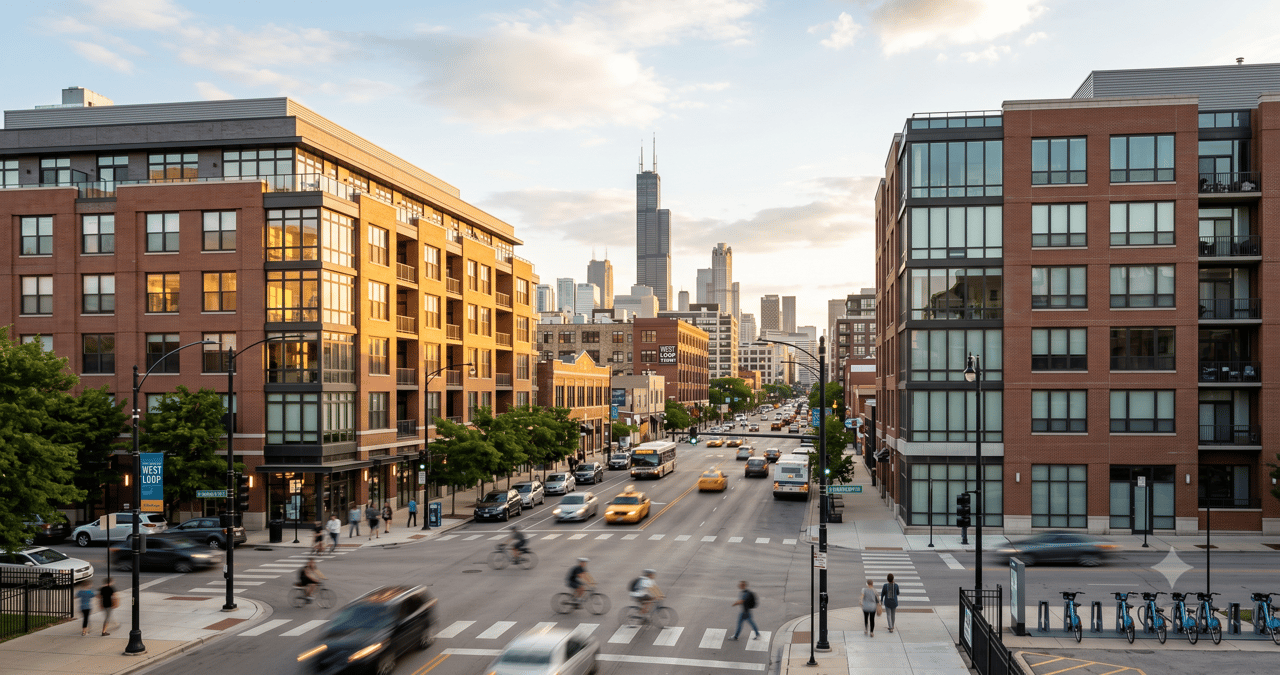
If you are comparing timber lofts vs concrete lofts in Chicago, understanding the differences can help you choose the right home and avoid costly mistakes. Chicago’s loft market, especially in neighborhoods like West Loop, River North, and South Loop, offers a mix of historic warehouse conversions and newer industrial-style buildings that look similar online but live very differently in person.
As a Chicago Realtor specializing in downtown loft and condo sales, I help buyers compare building styles, layouts, and resale potential across neighborhoods like West Loop, River North, and South Loop.
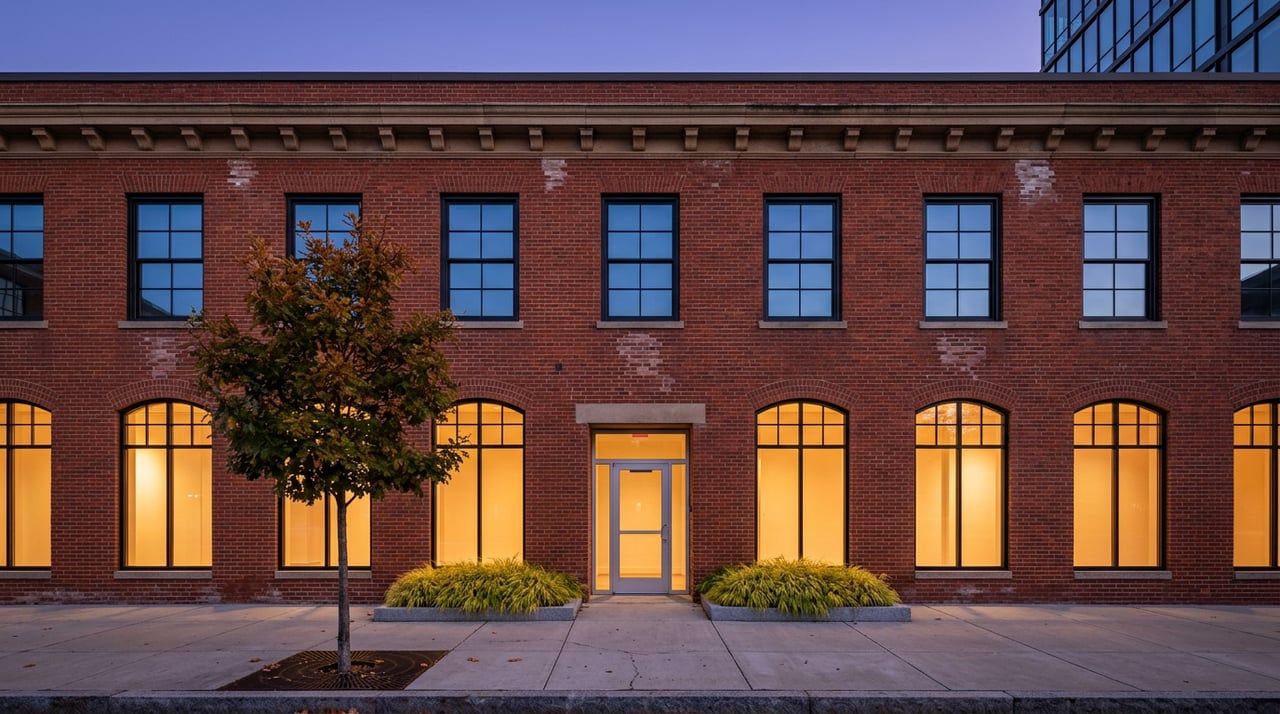
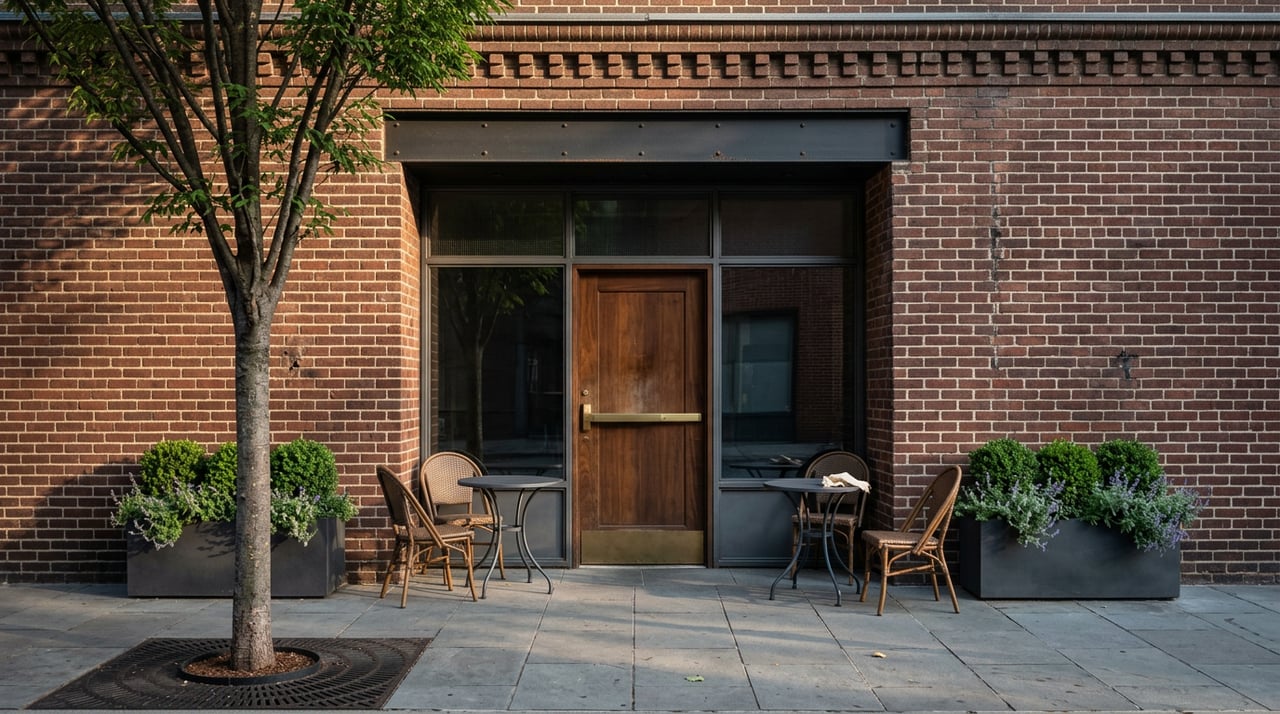
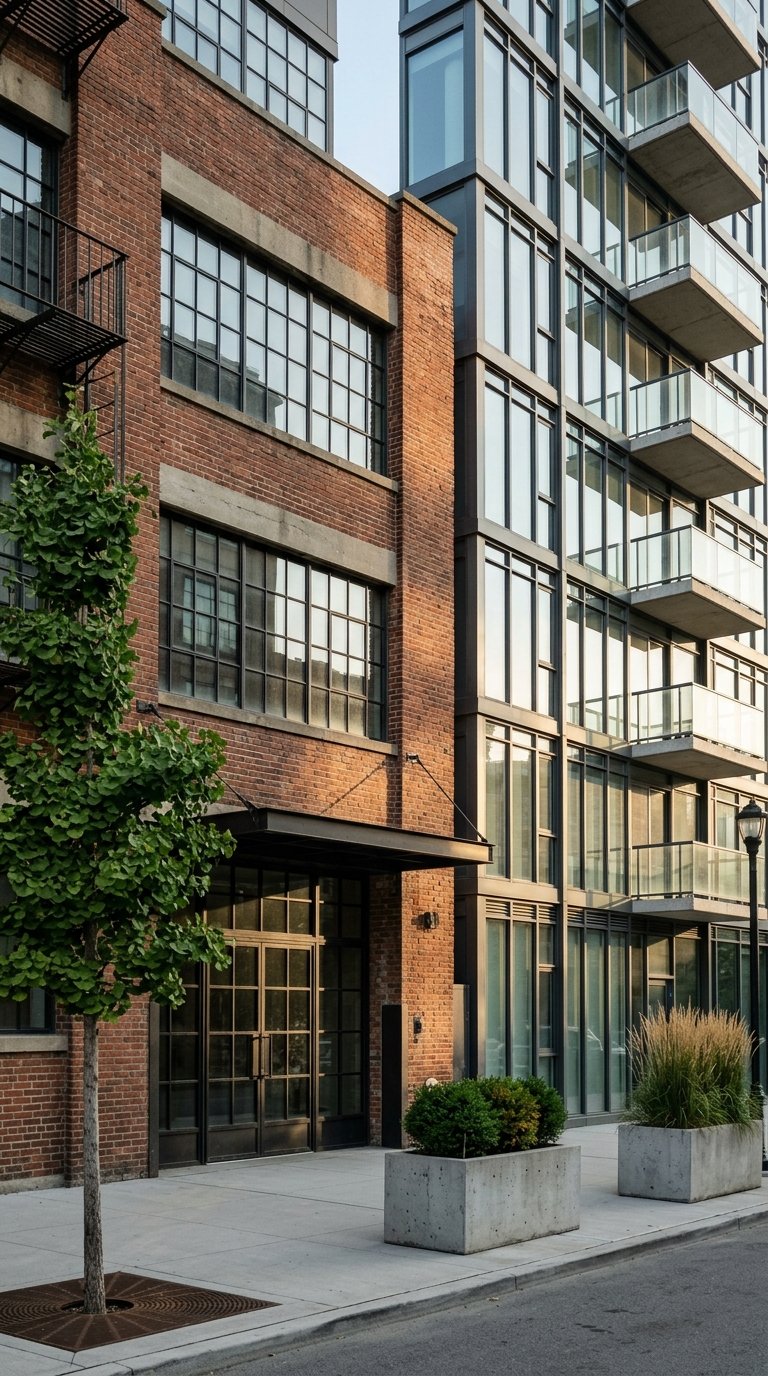
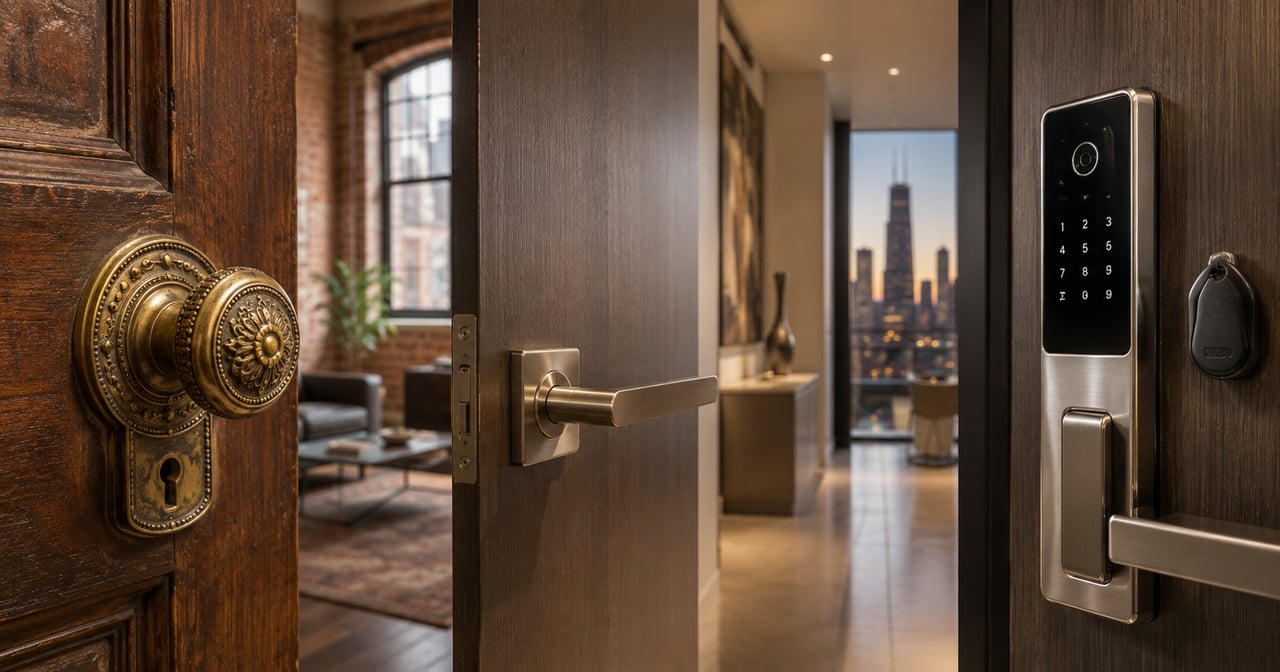
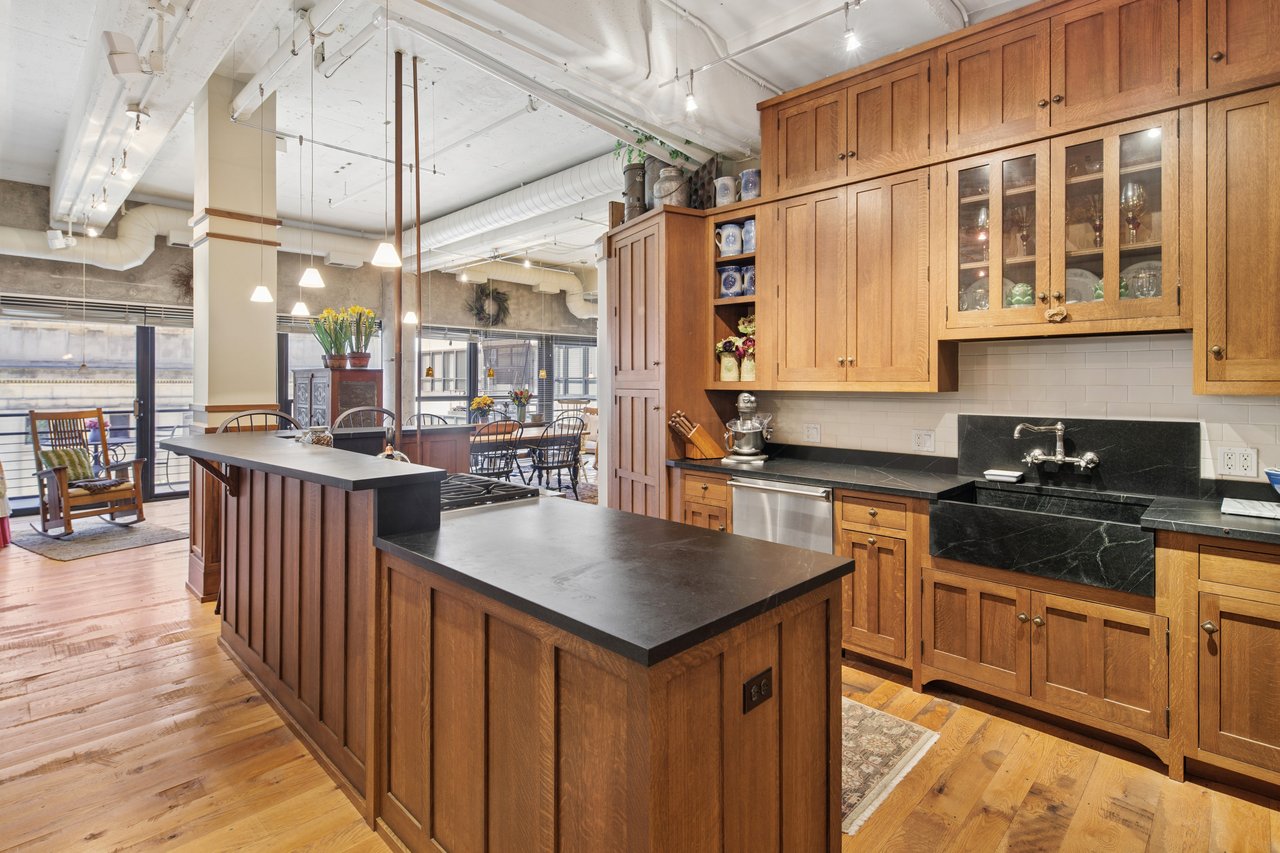
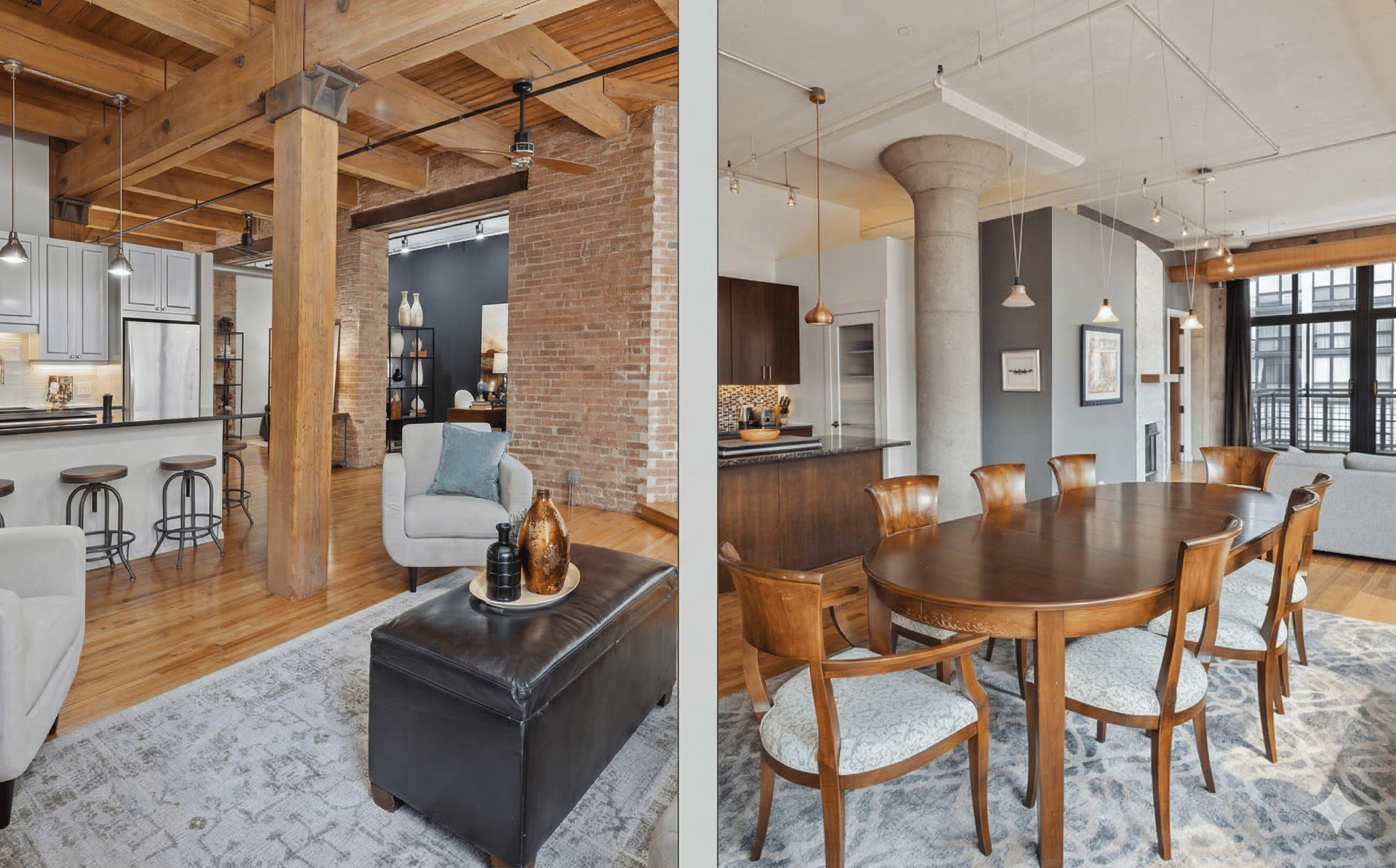
Timber lofts are typically converted from older industrial buildings and feature exposed wood beams, brick walls, and a warmer, more character-driven feel. Concrete lofts, on the other hand, are defined by exposed concrete ceilings, columns, and a cleaner, more modern aesthetic that often appeals to buyers coming from newer condo buildings.
Both loft styles can be excellent options, but they differ in layout, sound, light, maintenance, and long-term resale appeal. Understanding those differences is key when deciding which type of Chicago loft best fits your lifestyle and investment goals.
Quick Answer
-
Timber lofts in Chicago offer historic charm, exposed wood beams, brick, and a softer industrial look
-
Concrete lofts offer a cleaner, more modern aesthetic and often better sound separation depending on the building
-
The right choice depends on lifestyle, layout preferences, maintenance tolerance, and resale goals
This Guide Is for You If:
-
You’re deciding between a timber or concrete loft
-
You’re relocating to Chicago and exploring loft living
-
You want to understand resale differences before buying
What Is the Difference Between Timber and Concrete Lofts?
A timber loft is typically a historic warehouse conversion with exposed wood beams and brick, while a concrete loft features exposed concrete ceilings and a more modern industrial design.
At a Glance: Timber vs Concrete Lofts
| Feature | Timber Lofts | Concrete Lofts |
|---|---|---|
| Overall Style | Warm, historic, character-driven | Modern, clean, minimalist |
| Materials | Exposed wood beams, brick walls | Exposed concrete ceilings, columns |
| Layout | Unique, sometimes irregular | More predictable and structured |
| Ceiling & Windows | Detailed ceilings, large historic windows | Simpler lines, often larger modern windows |
| Sound & Privacy | Varies by building and upgrades | Often better insulation, but varies |
| Buyer Appeal | Buyers seeking charm and authenticity | Buyers seeking modern, streamlined living |
| Typical Locations | West Loop, Printer’s Row, older conversions | West Loop, River North, newer loft-style buildings |
| Resale Factors | Driven by character, layout, and light | Driven by layout, finishes, and building quality |
What Is a Timber Loft?
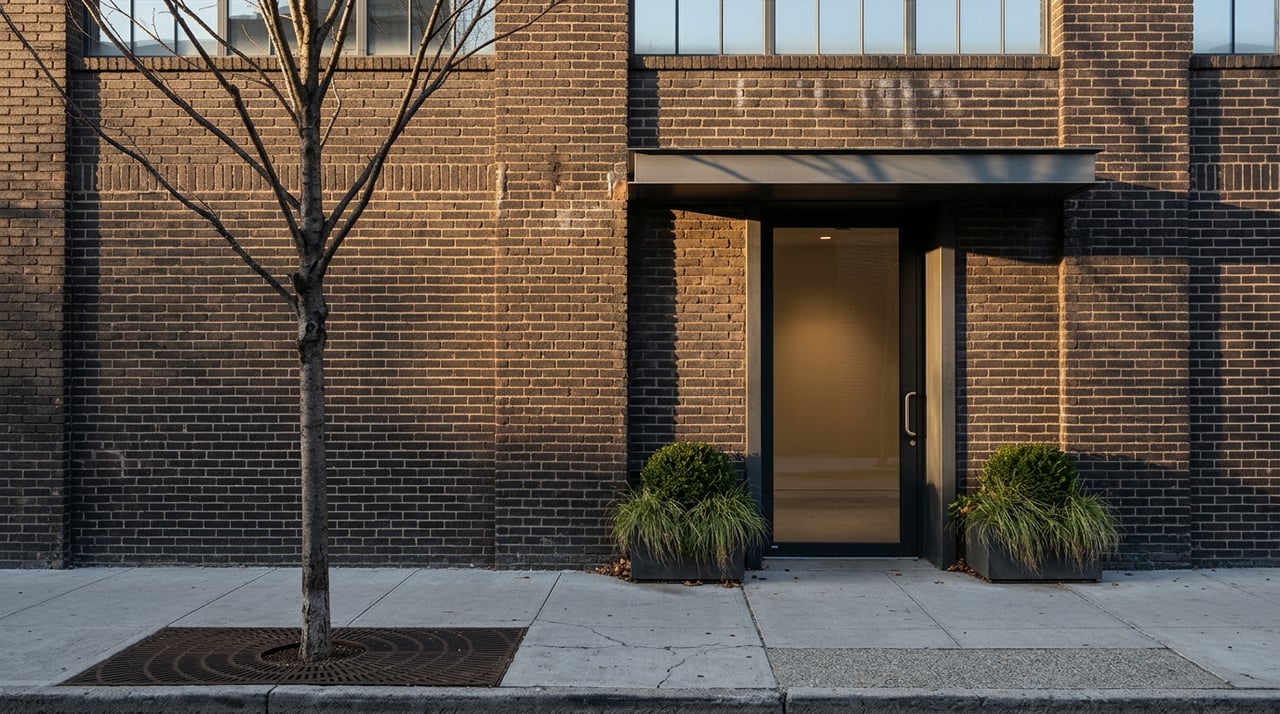
A timber loft is usually a true loft created from an older industrial or warehouse building. In Chicago, that often means exposed timber beams, brick walls, high ceilings, oversized windows, and floor plans with more individuality than a standard condo. Buyers choose timber lofts for character, history, and a sense of authenticity that is hard to replicate in new construction.
What Is a Concrete Loft?
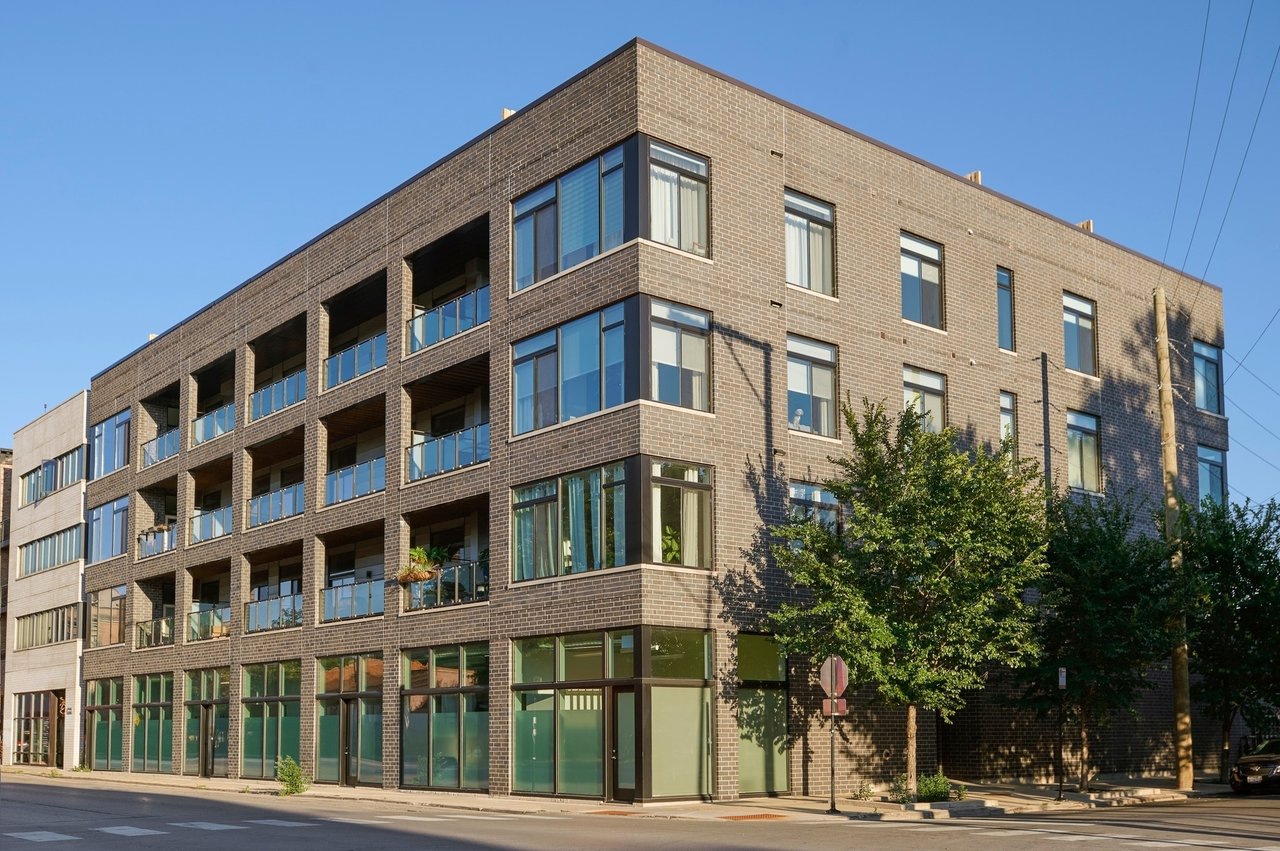
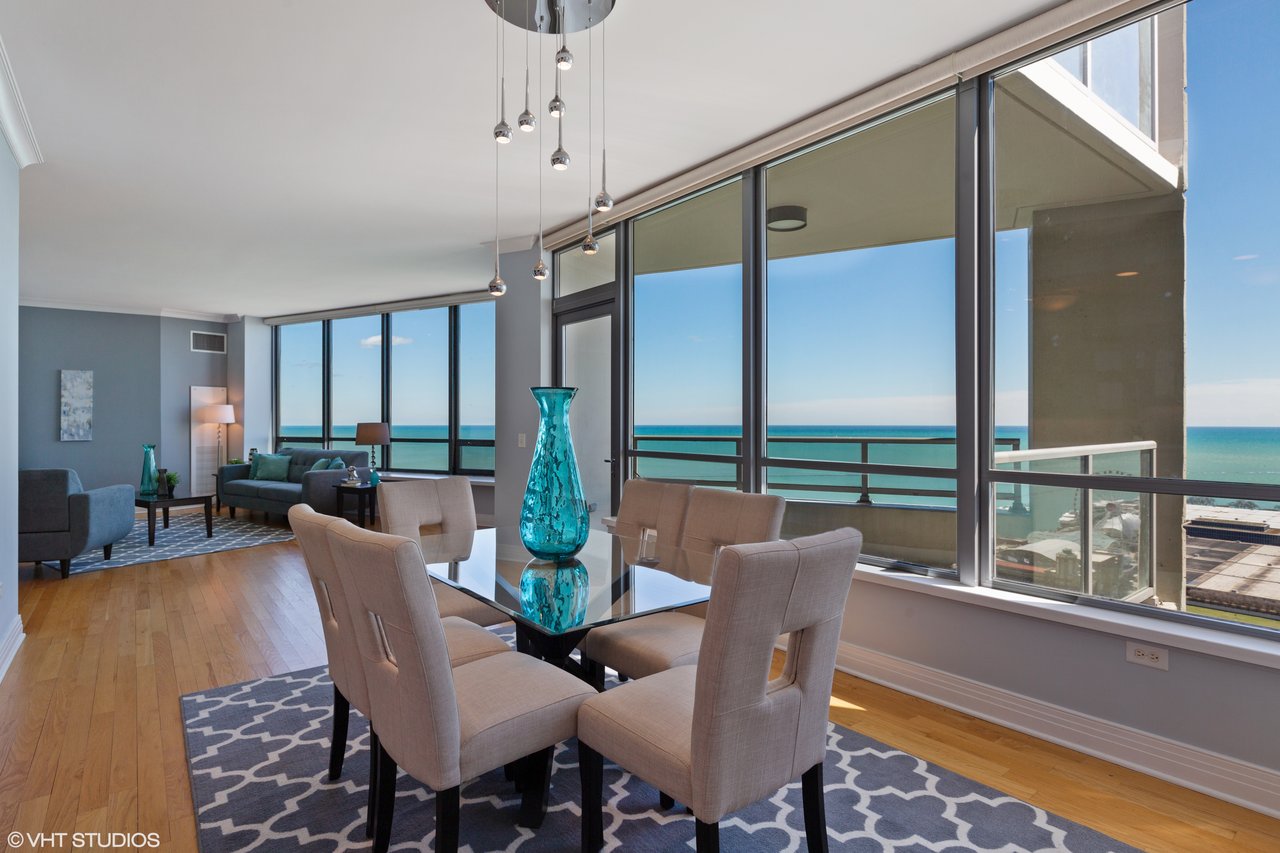
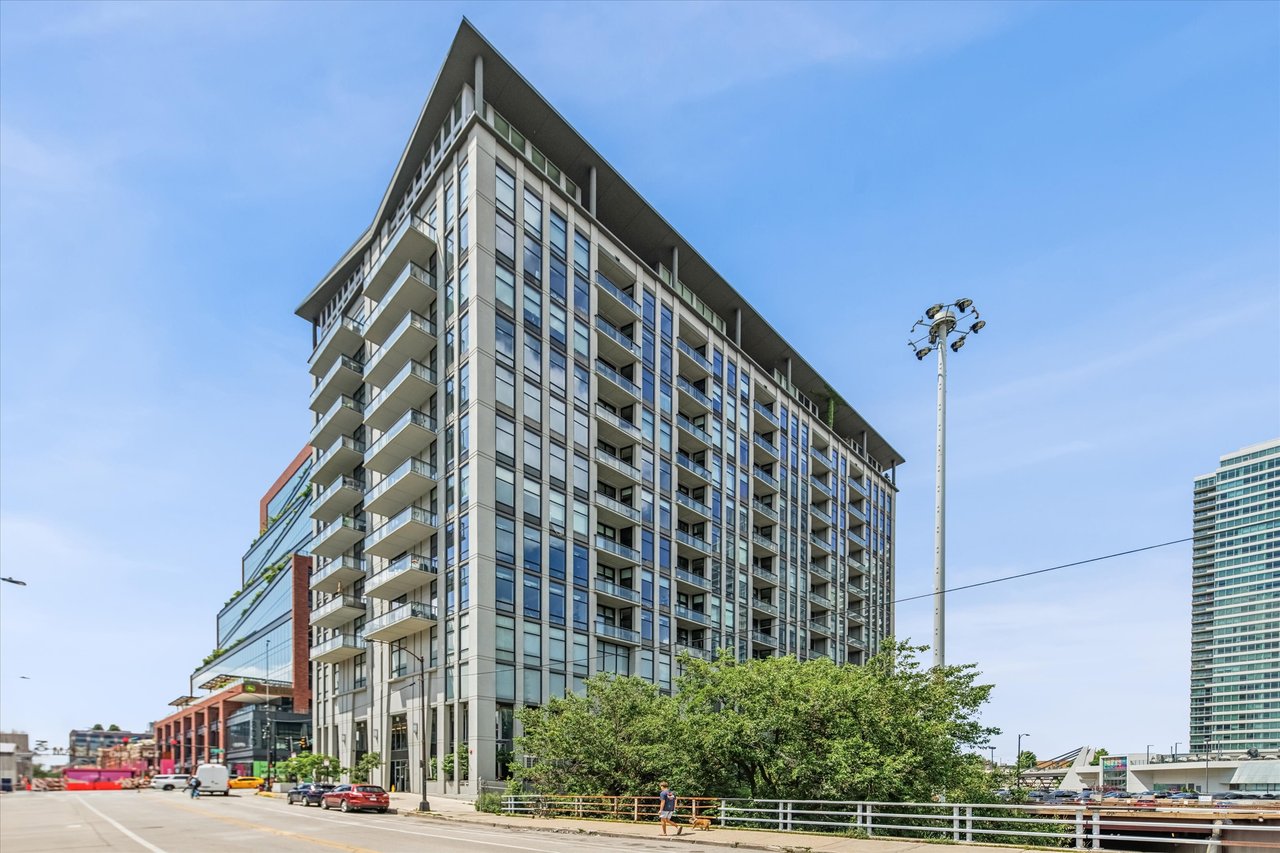
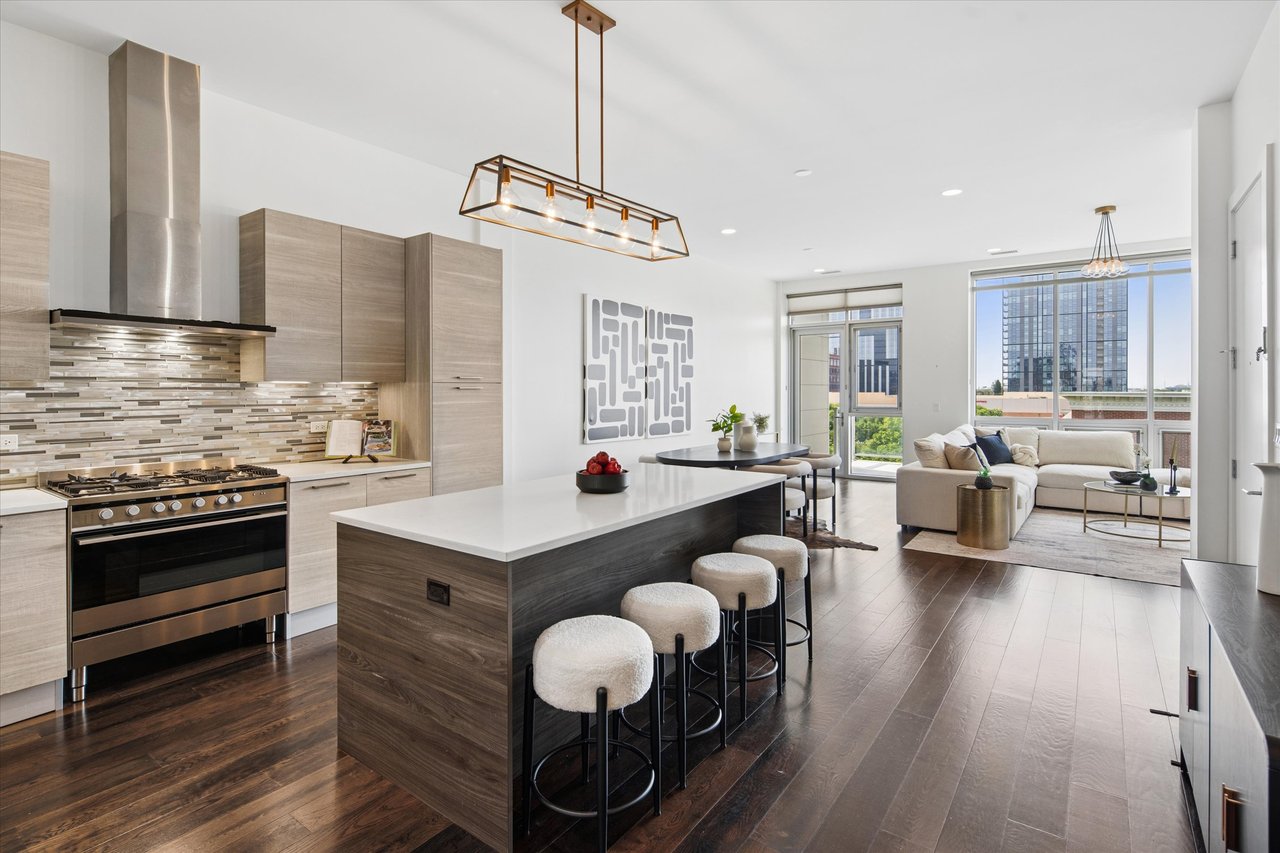
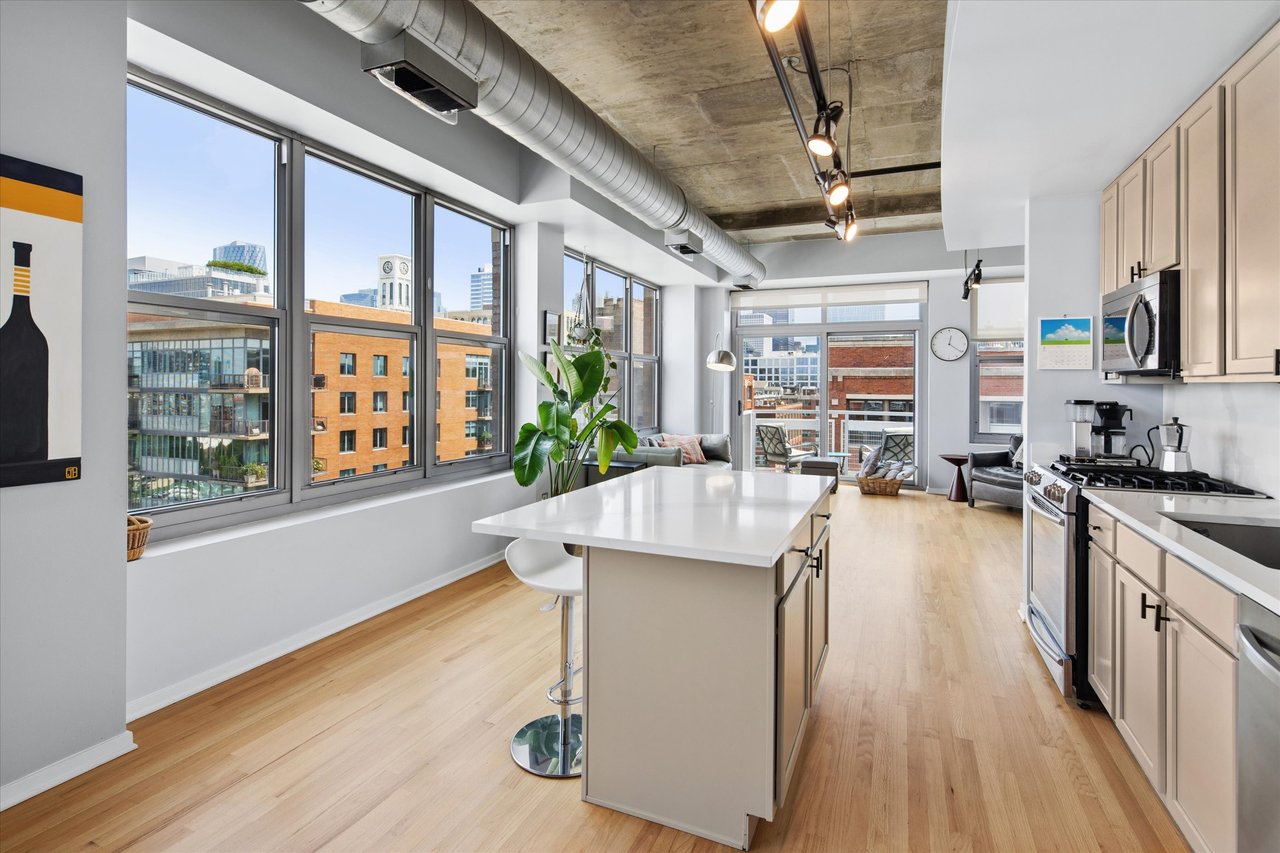
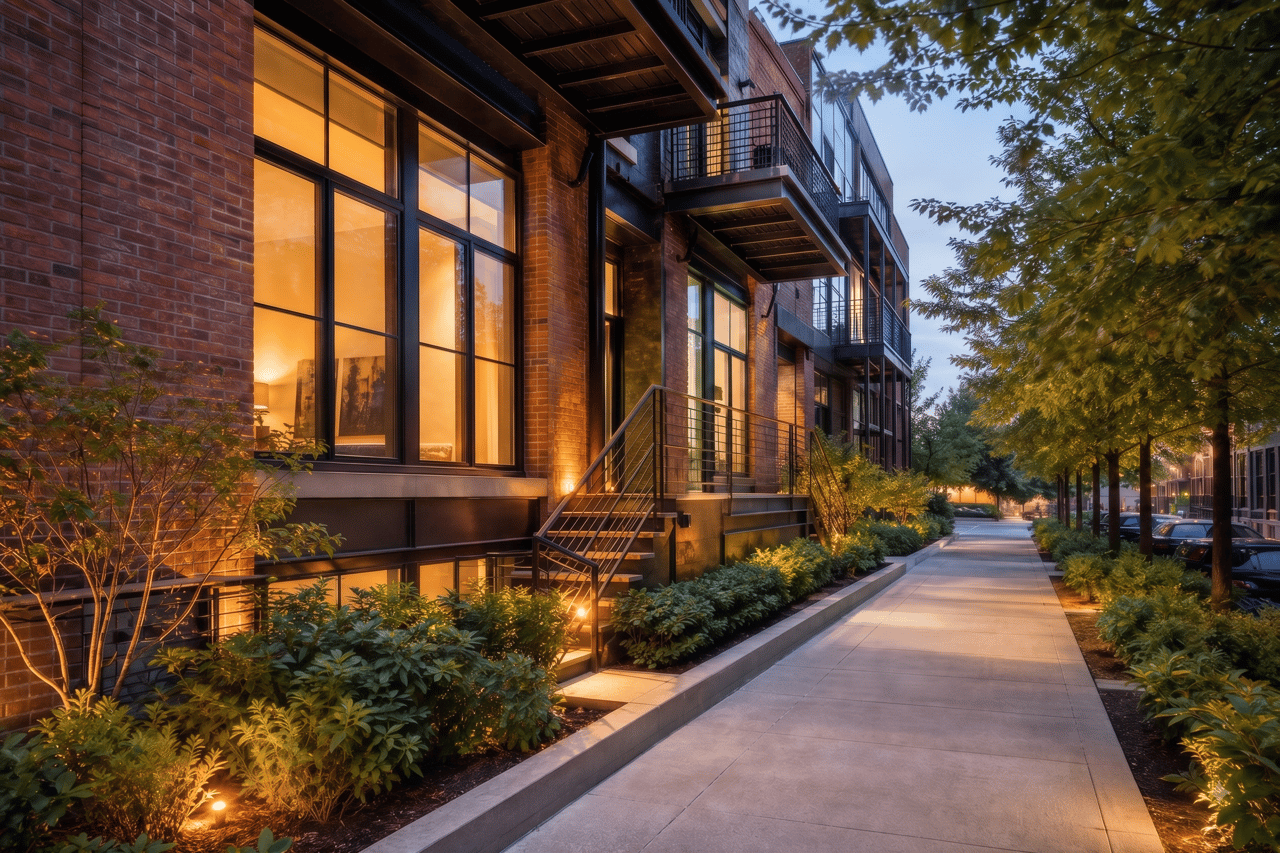
A concrete loft usually has an industrial aesthetic, but the structure is defined more by exposed concrete ceilings, columns, and floors than by wood beams and brick. Some are true loft conversions, while others are loft-style homes in more modern buildings. In Chicago, buyers often gravitate toward concrete lofts when they want a sharper, more contemporary look and a home that feels more streamlined.
What It’s Like to Live in a West Loop Loft
You can also explore what it’s like to live in a West Loop loft, where buyers often compare building style, neighborhood energy, and lifestyle together.
A Quick History of Chicago Loft Conversions
Chicago’s loft market is tied directly to the city’s industrial growth and reinvention. After the Great Chicago Fire of 1871, the city rebuilt rapidly using more fire-resistant materials like brick, steel, and concrete, shaping the industrial buildings that many Chicago lofts are carved from today.
Much of Chicago’s industrial architecture was shaped during this rebuilding period, when larger commercial buildings replaced earlier wood construction and later became residential loft conversions.
That is one reason loft living feels distinctly Chicago. You are not just buying square footage. You are often buying a piece of the city’s architectural story.
Timber Lofts vs Concrete Lofts: What Is the Difference?
1. Overall Feel
Timber lofts feel warmer and more textured, with exposed wood and brick creating a softer industrial look.
Concrete lofts feel cleaner and more architectural, often reading as more minimal and modern.
2. Layout
Timber lofts often have more quirks due to columns, beams, and older layouts.
Concrete lofts tend to have more predictable and structured layouts.
3. Light and Ceiling Lines
Timber lofts often feature dramatic windows and detailed ceilings.
Concrete lofts can feel brighter and more open with simpler structural lines.
4. Sound and Privacy
Sound transfer varies significantly by building, construction quality, and upgrades. Buyers should evaluate sound on a building-by-building basis rather than assuming one loft type is always quieter.
5. Buyer Appeal
Timber loft buyers often prioritize charm, uniqueness, and architectural warmth.
Concrete loft buyers often prefer clean lines, modern finishes, and easier-to-style spaces.
Pros and Cons of Timber Lofts
Pros
-
Strong visual character
-
Authentic Chicago loft feel
-
Exposed beams and brick create emotional appeal
-
Often located in highly desirable loft pockets
Cons
-
Layouts can be less efficient
-
Older buildings may have more quirks
-
Not all buyers prefer the aesthetic
-
Storage, sound, and HVAC vary widely
Pros and Cons of Concrete Lofts
Pros
-
Cleaner, more modern look
-
Easier to furnish and design
-
Appeals to buyers from newer condos
-
Often more predictable layouts
Cons
-
Can feel less distinctive
-
Some buildings are loft-inspired rather than true lofts
-
Finishes and resale vary by building
What Do Chicago Loft Prices Look Like?
There is no single loft price because location, square footage, ceiling height, finish level, parking, outdoor space, and building reputation all matter. But buyers should understand the broader downtown pricing context.
As of early 2026, Redfin’s neighborhood level condo data shows median sale or listing benchmarks around $480,000 in West Loop, $463,000 in River North, $389,000 in South Loop, and about $515,000 in Streeterville. True lofts can trade below or well above those numbers depending on the building and the specific home.
In practical terms, many smaller or more basic lofts may start in the upper $300,000s to $500,000s, while larger, renovated, or more architecturally special lofts in prime buildings can move into the $700,000 to $1 million plus range. Current active examples in West Loop and River North support that wide spread.
Which Loft Style Is Better for Resale?
Neither style is automatically better. The best resale property is usually the one that checks the most buyer boxes at the right price.
Presentation also plays a major role in how buyers perceive a loft. Even strong layouts can fall flat without the right setup, which is why many sellers invest in strategic staging to highlight space, light, and flow. You can read more about staging a condo in Chicago here.
Key factors include:
-
A strong location
-
A well-run HOA
-
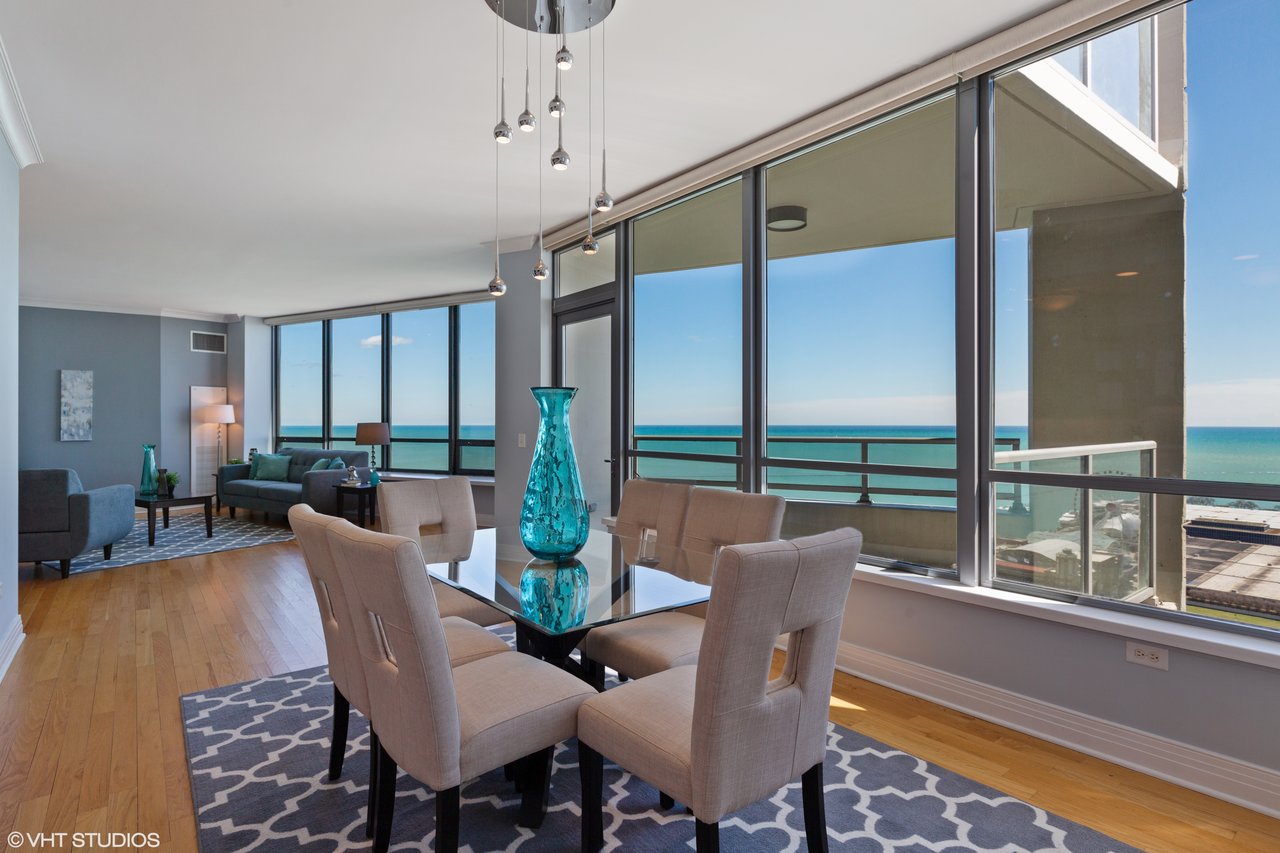
Good natural light
-
An efficient layout
-
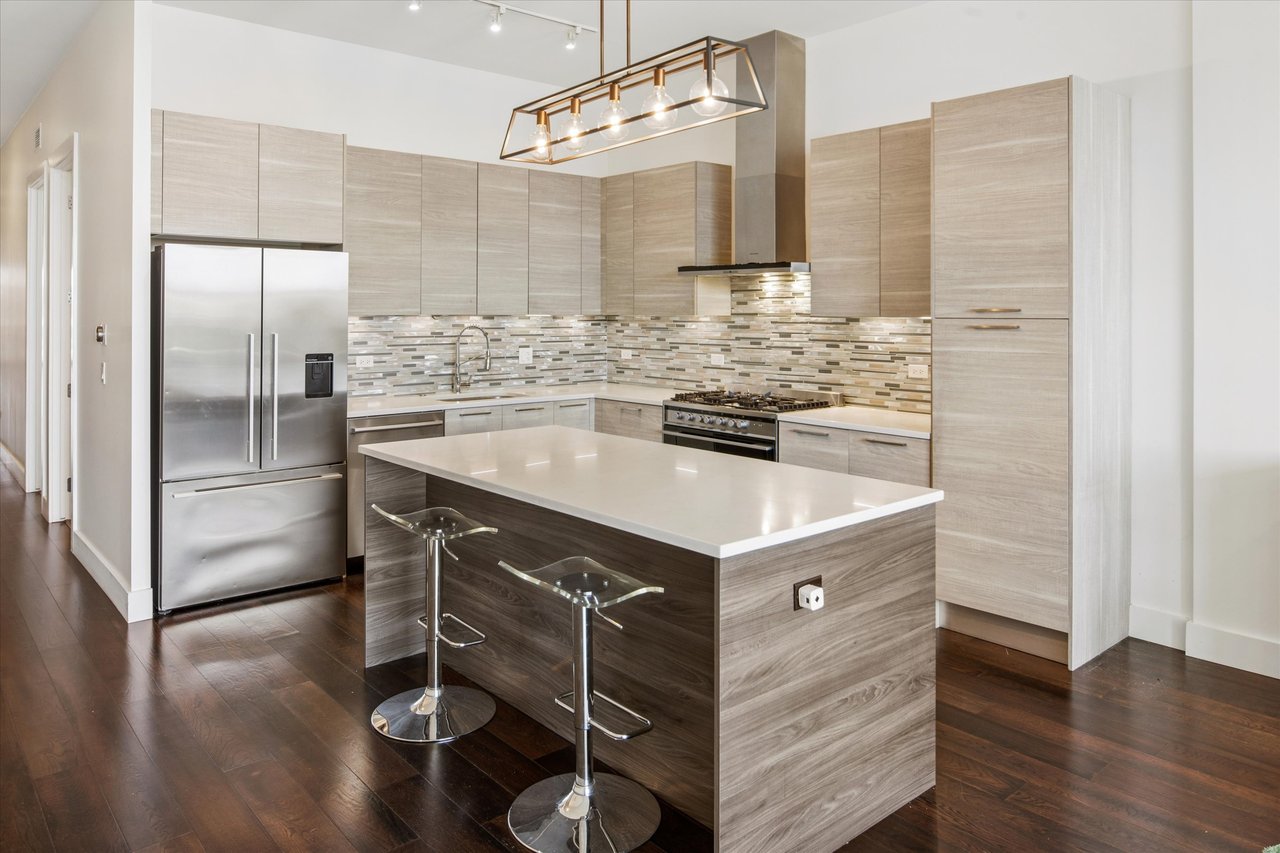
Updated kitchens and baths
-
Enclosed bedrooms when expected
-
A realistic pricing strategy
My Advice to Buyers Comparing Timber and Concrete Lofts
When buyers tour lofts in Chicago, I encourage them to focus on these questions:
Does this loft feel special enough to justify the price?
Lofts are emotional purchases. If it does not create a reaction, it may not create enough buyer urgency when you resell.
Is the layout livable every day?
Character matters, but so do closets, bedroom privacy, usable wall space, and where your dining table actually goes.
Is the building itself part of the value?
Some buildings have far better reputations, management, and long-term resale appeal than others.
Are you buying the loft style you truly want?
Do not buy timber because it sounds romantic if you really want sleek and modern. Do not buy concrete because it feels safe if what you actually love is warmth and history.
Local Expertise, Where Buyers Usually Start
In downtown Chicago, loft buyers most often start in West Loop, River North, and parts of South Loop or Printer’s Row. West Loop is especially important because it offers one of the strongest mixes of true loft inventory, neighborhood energy, and long term buyer demand. Christine’s own recent West Loop and downtown content reflects how often loft buyers compare building type, neighborhood identity, and resale potential together.
For many buyers, the right answer is not just timber versus concrete. It is timber in West Loop versus concrete in West Loop, or timber in Printer’s Row versus a more modern loft in River North. That is where building by building guidance really matters.
Key Takeaways
-
Timber lofts offer warmth, history, and character
-
Concrete lofts offer a cleaner, more modern aesthetic
-
West Loop is one of the best areas to compare both styles
-
Price depends more on building and condition than loft type
-
Strong fundamentals drive resale value
The Bottom Line for Chicago Loft Buyers
Chicago loft living is not one thing. Timber lofts and concrete lofts can both be excellent choices, but they deliver very different experiences. If you want warmth, texture, and true warehouse character, timber lofts are often the better fit. If you want cleaner lines, a more modern aesthetic, and a streamlined feel, a concrete loft may be the smarter choice. The key is buying the right building, in the right location, at the right price.
Next Steps for Loft Buyers in Chicago
-
Tour both timber and concrete lofts in the same neighborhood
-
Compare layouts, not just finishes
-
Evaluate building quality, not just style
People Also Ask: Chicago Loft Living
What is the difference between a timber loft and a concrete loft in Chicago?
Timber lofts in Chicago are typically converted warehouse spaces with exposed wood beams, brick walls, and a warmer, more historic feel. Concrete lofts feature exposed concrete ceilings and columns, offering a cleaner, more modern industrial design. The main differences come down to layout, sound, light, and overall aesthetic.
Are concrete lofts quieter than timber lofts?
Concrete lofts are often perceived as quieter because of thicker floor slabs, but sound transfer depends more on the building’s construction, insulation, and upgrades than loft type alone. In Chicago, both timber and concrete lofts can vary widely in noise levels depending on the specific building.
Are timber lofts more expensive than concrete lofts in Chicago?
Not necessarily. Loft pricing in Chicago depends more on location, size, condition, natural light, and building reputation than whether the loft is timber or concrete. Both types can range from entry-level units to luxury properties depending on the building and neighborhood.
Which Chicago neighborhoods have the most loft buildings?
West Loop is one of the most popular neighborhoods for loft living in Chicago, offering a mix of timber and concrete loft buildings. River North, South Loop, and Printer’s Row also have strong loft inventory, with a variety of styles and price points.
Are lofts a good investment in Chicago?
Lofts can be a strong investment in Chicago, especially in high-demand neighborhoods like West Loop and River North. Properties with good layouts, natural light, and updated finishes tend to perform best, regardless of whether they are timber or concrete.
What are the pros and cons of loft living in Chicago?
Lofts offer open layouts, high ceilings, and unique architectural character, but they can also come with trade-offs like limited storage, unconventional layouts, and varying sound insulation. The experience depends heavily on the specific building and unit.
Do lofts in Chicago have bedrooms?
Some lofts have fully enclosed bedrooms, while others feature open or partially enclosed sleeping areas. In many Chicago buildings, adding enclosed bedrooms can improve resale value because it appeals to a broader range of buyers.
Call or text 312-296-9300 or schedule a private consultation.
Still have questions about loft living in Chicago? Here are answers to some of the most common buyer and seller questions.
Frequently Asked Questions
Are timber lofts harder to resell than concrete lofts?
Not necessarily, but they appeal to different buyers. Timber lofts attract buyers looking for character and architectural detail, while concrete lofts often appeal to buyers who prefer a cleaner, more modern look. The strongest resale value usually comes from the specific building, layout, and condition rather than loft type alone. If you’re thinking about resale, choosing the right unit matters more than choosing timber or concrete. If resale is a priority, I can help you identify which buildings and layouts consistently perform best.
Can you add walls or enclose bedrooms in a Chicago loft?
In many Chicago lofts, yes, but it depends on the building’s rules, layout, and ventilation requirements. Enclosing bedrooms is one of the most common upgrades sellers make because it can significantly increase buyer demand and resale value. Before making changes, it’s important to review HOA guidelines and understand what future buyers in that building expect. I can help you evaluate what changes make sense in your specific building before you invest in upgrades.
Are lofts harder to finance in Chicago?
Most lofts are financeable, but some buildings with high investor ratios or unique layouts can have stricter lending requirements. This is especially true in certain downtown buildings. Buyers should review building financials and lending history early in the process to avoid surprises during underwriting. If you’re unsure about financing in a specific building, I can help you spot potential red flags early.
Do loft buildings in Chicago have rental restrictions?
Many do. Rental policies vary widely by building, with some allowing investors and others enforcing rental caps or minimum lease terms. If flexibility is important, this should be evaluated before making an offer since it can impact both lifestyle and long-term investment potential. I can help you review rental policies so you know exactly what’s allowed before you buy.
ABOUT THE AUTHOR
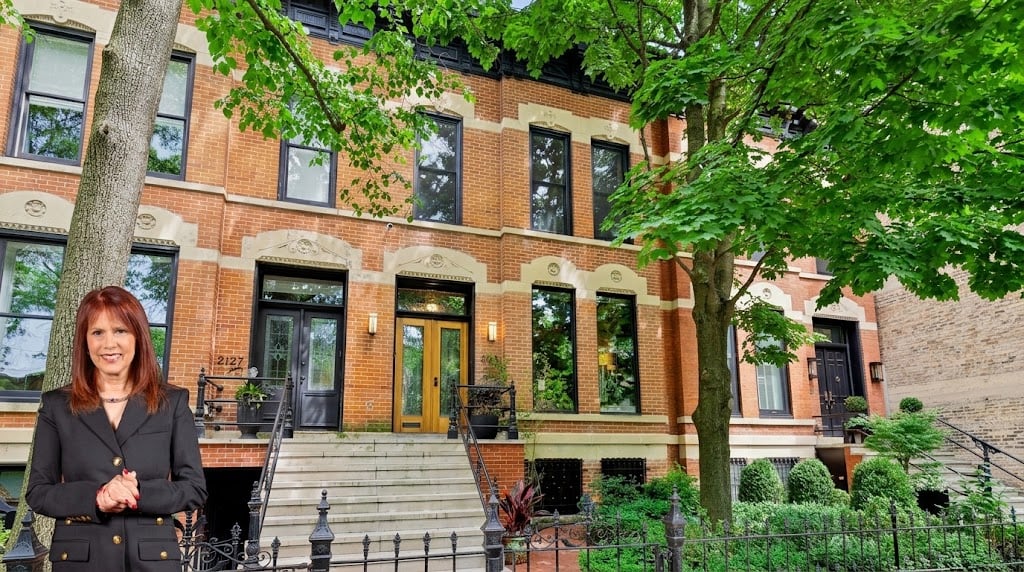
Christine Hancock is a Chicago Realtor with @properties Christie’s International Real Estate, bringing more than 25 years of experience and over $200 million in closed sales in the downtown condo market. With 96 five-star Zillow reviews, Christine is recognized for her commitment to client satisfaction and market expertise.
She specializes in high-rise and luxury condominium sales in West Loop, South Loop, River North, and Streeterville—helping buyers and sellers navigate complex transactions with data-driven pricing strategies and deep neighborhood insight.
Christine partners with clients to evaluate market trends, position properties competitively, and make confident, informed decisions in Chicago’s vibrant downtown housing market.
Call or text 312-296-9300 to discuss current market conditions or your real estate goals.